

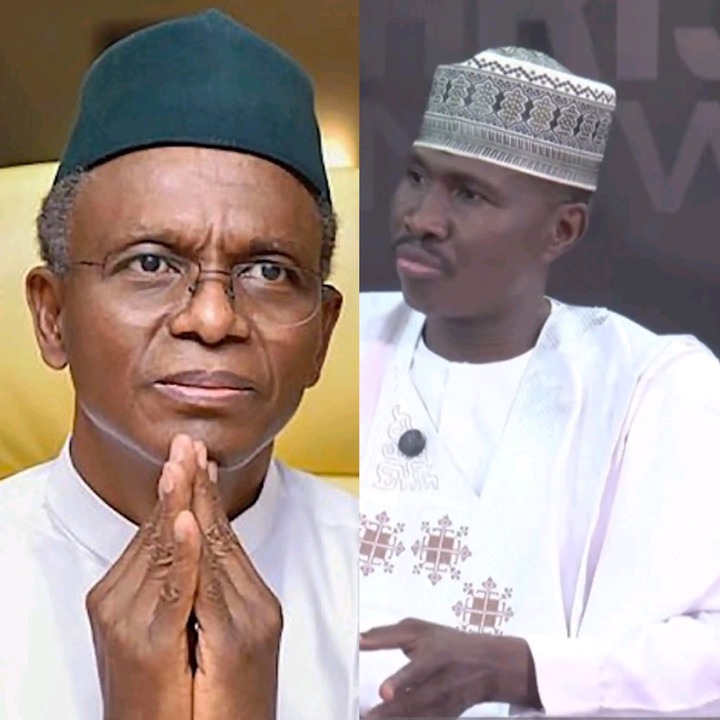
Security and Public Affairs Analyst, Salihu Dantata Mahmud, has said recent developments in Kaduna State point to a growing realignment within the political camp formerly associated with ex-Governor Nasir El-Rufai.
Mahmud made the observation while speaking on Arise News on Saturday, September 19, 2026, during a discussion on El-Rufai’s prolonged stay in the custody of the Independent Corrupt Practices and Other Related Offences Commission (ICPC) and the evolving political dynamics in the state.
According to the analyst, the former governor’s present predicament cannot be viewed solely from the perspective of his ongoing legal troubles, as significant changes have also occurred among politicians and individuals who previously maintained close ties with him.
Mahmud drew attention to the activities of two former members of El-Rufai’s political circle, suggesting that their changing positions have added to the developments surrounding the former governor.
He further brought up an unconfirmed report concerning an alleged rapprochement between one of El-Rufai’s wives and the incumbent Kaduna State Governor, Uba Sani.
Mahmud, however, stressed that the claim should not be regarded as established information, describing it as a report that had yet to be verified.
The development comes against the backdrop of the increasingly strained relationship between El-Rufai and Sani, who were once closely aligned politically and played important roles in Kaduna’s political administration.
Sani was a key political figure during El-Rufai’s tenure and later took over from him as governor in 2023. Their relationship has since witnessed considerable friction, with differences between the two political camps becoming more pronounced.
El-Rufai’s detention by the ICPC has also remained a major point of discussion among political stakeholders and observers in Kaduna.
The former governor has faced ongoing proceedings in connection with the anti-corruption agency’s investigation, while the ICPC has maintained that his continued custody is based on judicial orders.
Beyond his detention, El-Rufai has also pursued legal action over conditions surrounding his custody. In August, he reportedly filed a ₦10 billion suit over alleged limitations placed on visits by his wife and son.
His continued absence from Kaduna’s political scene has further intensified speculation about the future of his political network, particularly as politicians begin positioning themselves ahead of the 2027 general elections.
Mahmud’s comments therefore provide a broader perspective on the developments surrounding El-Rufai, highlighting the changes within a political structure that was once closely associated with the former governor.
While the alleged reconciliation between El-Rufai’s wife and Governor Sani remains unverified, the report has nevertheless generated further interest in the changing relationships among key figures connected to Kaduna’s political landscape.