

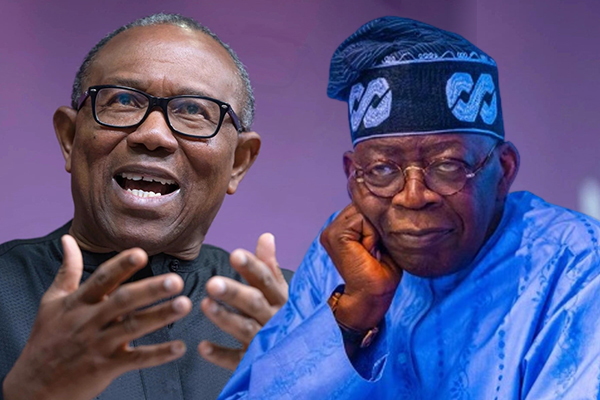
Port Harcourt, September 4, 2026 — Peter Obi, presidential candidate of the Nigeria Democratic Congress (NDC), told supporters at a town hall meeting in Port Harcourt, Rivers State, that he is prepared to make the ultimate sacrifice in the fight to “rescue” Nigeria, urging Nigerians not to be intimidated as campaigns intensify ahead of the 2027 general elections.
Obi’s remarks, delivered at an event styled “Obi Talks Nigeria,” came in direct response to a supporter in the crowd who declared a willingness to die defending the vote. According to Channels Television, which broadcast the town hall, Obi told the gathering: “Don’t be intimidated… Somebody said, ‘We are ready to die.’ Let me tell you, I’m equally ready to die. So you’re not alone.”
The former Anambra State governor said the responsibility for protecting the integrity of the 2027 polls could not be left to politicians or election officials alone, insisting ordinary citizens must actively defend their votes. “All they want is for you to defend and demand that the vote must count,” he said, adding that this demand would be pursued “aggressively.”
He also referenced the failures of INEC’s result-viewing portal (IReV) during the 2023 general election, which fuelled widespread controversy over the credibility of that vote, and cautioned the electoral commission against tampering with results in 2027. Obi predicted that any attempt to manipulate the outcome would meet stiffer resistance than in the past. “Yes, they will try to manipulate it,” he said, “but let me tell you, it will not be easy this time.”
Beyond the security of the vote, Obi used the town hall to link Nigeria’s economic and infrastructural troubles to what he described as a failure of political leadership, citing the state of the country’s refineries as an example of how weak governance ripples through critical sectors. He urged attendees to treat the 2027 election as a chance to demand accountability and reshape the country’s direction through the ballot box.
The Port Harcourt stop is part of a wider town hall series through which Obi has been engaging Nigerians directly ahead of next year’s presidential vote, with sessions typically including open questions from the audience on political, economic and security issues. The event was organised alongside NDC governorship candidate for Rivers State, Dumo Lulu-Briggs, and was attended by Obi’s running mate, former Kano State Governor Rabiu Kwankwaso, who also addressed the crowd.
Obi placed third in the 2023 presidential election as the Labour Party’s candidate, a result that nonetheless established him as a leading figure in Nigeria’s opposition politics and gave rise to the “Obidient” movement. He and Kwankwaso — who ran on the New Nigeria People’s Party platform in 2023 — later joined the African Democratic Congress before defecting again, citing internal disagreements and unresolved legal disputes within that party. Both men subsequently joined the NDC, where Obi was affirmed as presidential candidate in May 2026 and immediately named Kwankwaso as his running mate, pairing Obi’s support base in the South-East and South-South with Kwankwaso’s northern political network built around his Kwankwasiyya movement.
At the same town hall, Obi went further than his usual campaign messaging, directly inviting Nigerians to investigate his background and that of his running mate and to publicly expose any wrongdoing they could find. “I want to give every Nigerian the opportunity to know who I am,” he said. “Both of us have presented our backgrounds, from our dates of birth to our schools, education and all, to the people. You can go and verify our backgrounds worldwide, anywhere.”
The challenge came against the backdrop of intensifying public debate over the personal records of the three leading 2027 presidential contenders — Obi, President Bola Tinubu and former Vice President Atiku Abubakar — following the Independent National Electoral Commission’s publication of candidates’ particulars in late July. That disclosure exercise reignited scrutiny of educational credentials: Tinubu’s submission again left the sections for primary and secondary schooling blank, repeating a pattern from 2023 that had previously triggered court battles in the United States and Nigeria over his Chicago State University certificate, while Atiku listed his early qualifications without attaching supporting certificates or naming the schools he attended. Obi, by contrast, submitted a full record — from Augustine’s Primary School in Anambra through Christ the King College to his first degree at the University of Nigeria, Nsukka — along with the accompanying certificates.
Obi also made a pointed, if indirect, reference to a defamation suit he has filed against Kenneth Okonkwo, his 2023 campaign spokesperson who has since aligned with the African Democratic Congress. Okonkwo had alleged on a television programme that Obi and NDC officials solicited N10 million from House of Representatives aspirants seeking party tickets, claims Obi has denied and is contesting in a N8 billion suit before the Anambra State High Court. Referring to the case, Obi said: “We have sued somebody in court. He said he knows something he can say and the people will be shocked. I said I want you to say what people will be shocked about. And I’m challenging every Nigerian: if there is anything that you know I have done that is wrong, say it out now.” He extended the same challenge to Kwankwaso, saying anyone with damaging information about the former Kano governor should also come forward.
Obi tied the point back to his broader message on electoral integrity, arguing that anyone seeking Nigeria’s highest office must emerge through a credible and transparent process. “You cannot continue to answer his excellency,” he said, “when the process that got you there is not excellent.”
Obi’s comments arrive amid a broader surge of opposition activity ahead of 2027, with parties such as the NDC moving to mobilise voters and unveil candidates across the country — the NDC has already named governorship candidates in 28 states. His language echoes long-standing opposition concerns about voter intimidation and result manipulation at polling units, concerns that trace back to disputes over the 2023 election and the performance of INEC’s electronic transmission systems.
Neither the Independent National Electoral Commission nor the ruling All Progressives Congress had issued a public response to Obi’s remarks as of the time of this report.