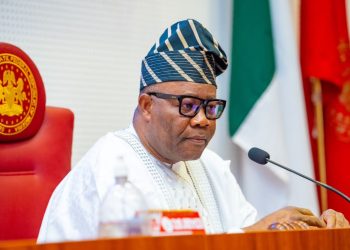



Lagos, Nigeria — The Nigeria Police Force has again demonstrated the value of international intelligence cooperation, rescuing two Colombian women who were lured to Lagos, held captive, and stripped of their travel documents by a suspected human trafficking syndicate. The operation, credited to swift coordination between INTERPOL’s Lagos and Bogotá offices, is being praised as one of the more efficient anti-trafficking interventions in recent months — and it deserves commendation for the Inspector-General of Police, Olatunji Rilwan Disu, whose leadership appears to be sharpening the force’s response to transnational crime.
According to the Force Public Relations Officer, CSP Ani Iniedu, the National Central Bureau (NCB)-INTERPOL, Lagos Annex, received intelligence from INTERPOL-NCB Bogotá on August 26, 2026, concerning two Colombian nationals, Maria Camila Rodas Ortiz and Yuliet Fernanda Rios Mesa, who had gone missing after arriving in Nigeria.
Police say the women had been deceived into travelling to the country, after which their travel documents were seized by suspected Chinese nationals allegedly linked to the syndicate. Acting on the tip, operatives launched a covert tracking operation that led them to a hideout in Lagos, where both women were rescued the same day the intelligence was received. The suspects reportedly fled the scene as police closed in and remain at large.
The rescued women are said to be in safe custody and receiving support, while the Colombian Embassy in Accra — which covers Nigeria — is working with INTERPOL to arrange hotel accommodation and emergency travel documents so the pair can return home to Bogotá.
This rescue is a credit to IGP Olatunji Rilwan Disu and the officers of the NCB-INTERPOL Lagos Annex. Acting on foreign intelligence and resolving a live hostage-style situation within a single day is not a small feat, particularly given how often trafficking victims are moved before rescue teams can react. The IGP’s public reaffirmation of the Force’s commitment to protecting residents and deepening international law enforcement partnerships should be more than rhetoric — it should be the standard the Force holds itself to going forward.
Nigeria’s police leadership has, in recent memory, faced criticism for slow responses to organised crime and for gaps in coordination with global partners. This operation suggests that channels between Nigerian police and INTERPOL’s international network are working as intended. The IGP and his team deserve recognition for that — and should be encouraged to sustain, and ideally expand, this level of responsiveness. A single successful rescue should become a template, not an exception, especially as Nigeria increasingly finds itself entangled in trafficking routes that stretch well beyond West Africa.
While the rescue is worth celebrating, it also exposes an uncomfortable reality: Nigeria is no longer just a source and transit country for trafficking victims moving toward Europe and the Gulf — it is now a destination where trafficking syndicates, some evidently linked to Chinese nationals, are bringing victims in from as far as South America. That represents a troubling widening of the criminal map, and it should concern Nigerians and policymakers alike.
The country already carries a heavy burden in this area. Nigeria remains one of Africa’s largest hubs for trafficking in persons, with an estimated 1.6 million people living in conditions of modern slavery in recent years, ranking it among the highest-prevalence countries on the continent. Lagos alone has repeatedly been identified by NAPTIP as the country’s busiest hub for both domestic and international trafficking activity, a status that likely made it an attractive operating base for the syndicate behind this case.
Anti-trafficking officials have also flagged a newer and more technologically sophisticated threat: cyber-enabled trafficking, in which victims from dozens of countries are funneled into scam compounds, with warnings that the pattern seen heavily in Southeast Asia is beginning to creep into Nigeria and other African nations. The presence of Chinese nationals allegedly running the syndicate in this Lagos case fits into that wider, worrying pattern of foreign-linked organised crime networks embedding themselves in Nigerian cities.
This is precisely the kind of case Nigeria can ill afford to treat as an isolated incident. The country is already stretched thin fighting terrorism and insurgency in the North-East, banditry in the North-West, and separatist agitation in the South-East. Layering international organised crime — human trafficking syndicates operating with apparent ease inside Lagos, one of the country’s most policed cities — onto that existing security burden raises serious questions about porous borders, weak document controls, and the ability of criminal networks to exploit Nigeria’s territory for operations that have nothing to do with Nigerians at all.
There is a real danger in normalising this trend. When foreign trafficking networks can establish hideouts inside Nigerian cities to exploit victims from other continents, it signals vulnerabilities in immigration screening, inter-agency intelligence sharing, and urban security enforcement — the same vulnerabilities that terrorist and extremist networks have historically sought to exploit. A country already contending with Boko Haram, ISWAP, and armed banditry cannot treat the infiltration of international trafficking syndicates as a peripheral law enforcement issue; it is a core national security concern that deserves the same urgency as counter-terrorism operations.
The successful rescue of the two Colombian women should be seen as proof that Nigerian police, when properly resourced and plugged into international intelligence networks, can respond quickly and effectively. The challenge now is consistency. IGP Disu should be encouraged to institutionalise this kind of rapid-response cooperation with INTERPOL and foreign missions, expand surveillance of known trafficking hideouts in Lagos and other high-risk states, and push for tighter coordination with NAPTIP, immigration authorities, and the Department of State Services to close the gaps that allow foreign-linked syndicates to operate undetected.
Nigeria’s international image and internal security both depend on demonstrating that it is not a soft target for transnational organised crime. This rescue is a good start. Sustaining — and scaling — that momentum is the real test.