

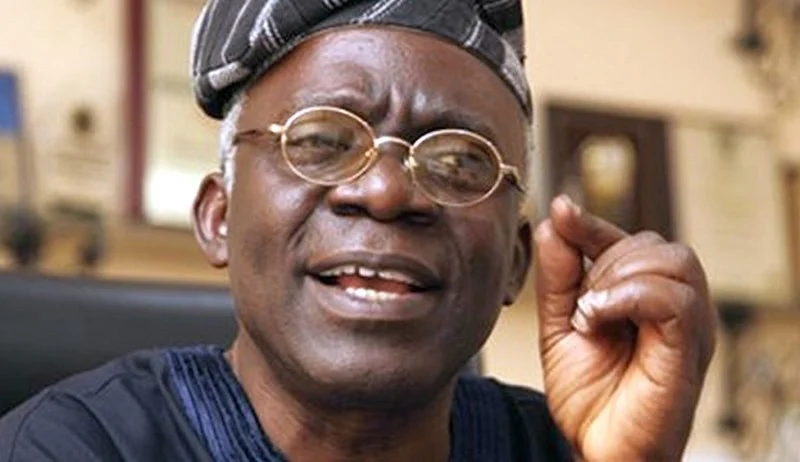
Human rights lawyer and Senior Advocate of Nigeria (SAN), Femi Falana, has warned against allowing courts to determine the winners of elections in Nigeria, stressing that the judiciary should not replace the choice of voters.
Falana made the remarks while expressing concern over the increasing number of legal disputes and conflicting court judgments surrounding preparations for the 2027 general elections.
The senior lawyer argued that elections should be decided primarily through the votes cast by Nigerians, while courts should focus on resolving genuine electoral disputes in accordance with the law.
His comments come amid concerns over conflicting judgments involving the Independent National Electoral Commission (INEC), particularly concerning the commission’s authority to establish timelines for political parties to conduct primaries and submit relevant electoral information.
Falana had earlier criticised two separate Federal High Court decisions that appeared to take different positions on INEC’s powers. One judgment reportedly questioned aspects of INEC’s timetable, while another affirmed the commission’s authority to establish timelines for electoral activities.
According to Falana, conflicting decisions from courts of coordinate jurisdiction could create confusion for INEC, political parties and voters as preparations for the 2027 election continue.
He warned that unresolved judicial contradictions could undermine confidence in the electoral process and create unnecessary uncertainty.
Falana also called on the National Judicial Council (NJC) and the Nigerian Bar Association (NBA) to examine circumstances surrounding conflicting court orders and take steps to prevent similar situations from occurring.
He maintained that lawyers should avoid filing cases in ways that could encourage conflicting judgments, while judges should exercise caution when dealing with matters that could have significant consequences for the electoral process.
The human rights lawyer drew attention to Nigeria’s political history, warning that disputes involving courts and elections should not be allowed to create a crisis similar to the events surrounding the annulment of the 1993 presidential election.
He urged stakeholders in the judiciary and political system to ensure that legal processes strengthen rather than weaken democracy.
Falana’s position comes as political parties intensify preparations for the 2027 general elections, with candidates and parties already engaging in political mobilisation and legal battles over nominations and electoral procedures.
The 2027 election is expected to generate significant legal activity, particularly around party primaries, candidate eligibility, substitutions and the conduct of the polls.
Falana stressed the importance of ensuring that such disputes are handled within a clear and consistent legal framework.
He also emphasised that the credibility of an election depends not only on the conduct of INEC and political parties but also on the ability of institutions, including the judiciary, to provide clear and consistent interpretation of electoral laws.
The lawyer’s latest warning has therefore renewed discussion about the role of the judiciary in Nigeria’s electoral system and the need to ensure that the ultimate decision in elections reflects the will of voters.
As preparations for 2027 continue, political parties, INEC, lawyers and other stakeholders are expected to closely monitor ongoing legal disputes and court decisions that could affect the electoral timetable.