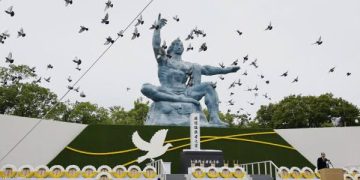


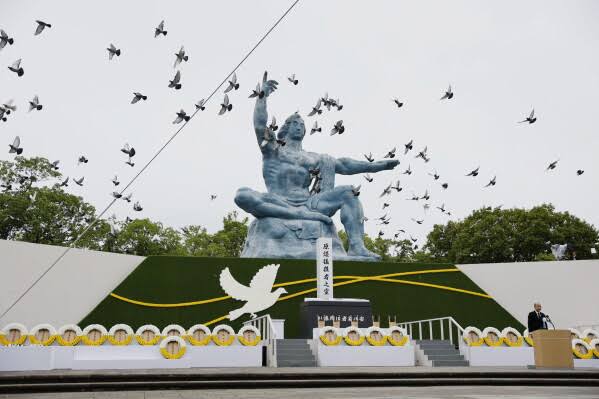
Taiwan’s top economic representative in Japan has boycotted this year’s memorial ceremony marking the 81st anniversary of the US atomic bombing of Nagasaki, accusing city officials of disrespecting Taiwan and treating it as a non-sovereign entity.
Lee Yi-yang, head of the Taipei Economic and Cultural Representative Office in Tokyo, said he and two deputies refused to attend the ceremony after they were assigned seats that were not among those reserved for diplomatic missions.
Lee accused Nagasaki officials of “deliberately” denying Taiwan’s status and said the seating arrangement disregarded Taiwan’s sovereignty and dignity. His office also accused the city of effectively becoming a “pawn” of China’s position that Taiwan is not a state.
Instead of attending personally, Lee sent a lower-ranking official from Fukuoka to represent Taiwan at the ceremony.
Nagasaki officials disputed the accusation, saying Taiwan’s representatives were placed among foreign attendees from international organisations and envoys who could not be accommodated in the special section reserved for ambassadors and senior Japanese officials.
Nagasaki Mayor Shiro Suzuki said he had sincerely explained the seating arrangements to the Taiwanese representatives and would continue working to gain their understanding of the city’s invitation policy.
The dispute is linked to Japan’s diplomatic relationship with China. Tokyo established diplomatic relations with Beijing in 1972 and ended its formal diplomatic ties with Taipei. However, Japan and Taiwan continue to maintain close economic and trade relations through unofficial channels.
The Nagasaki memorial was attended by representatives from 98 countries and three international organisations, including the United Nations, European Union and International Committee of the Red Cross.
The ceremony commemorated the August 9, 1945, US atomic bombing of Nagasaki, which killed an estimated 70,000 people by the end of that year. The attack came three days after Hiroshima was bombed, killing about 140,000 people. Japan surrendered on August 15, bringing World War II to an end.
Nagasaki has previously faced diplomatic controversy over its guest policy. In 2024, the US ambassador and representatives of five other G7 countries boycotted the ceremony after Nagasaki did not invite Israel amid the escalating conflict in the Middle East.
Following that controversy, Nagasaki adopted a policy of inviting countries, regions and organisations with diplomatic missions in Japan or at the United Nations, including countries such as North Korea.
Taiwan does not fall into either category. However, Nagasaki accommodated Taiwanese representatives at their request last year.
Lee said he attended last year despite receiving a similar seating arrangement because he wanted to prioritise friendship. This year, however, he decided to boycott the ceremony.
He also attended the Hiroshima atomic bombing memorial on August 6, where he said Taiwan was treated equally alongside other foreign representatives.
The dispute highlights the delicate balance Japan faces in maintaining relations with both Taiwan and China, as tensions over Taiwan’s status and China’s growing military power continue to shape politics in East Asia.