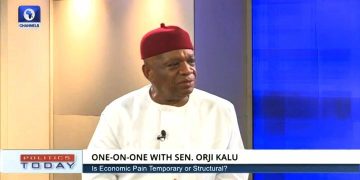


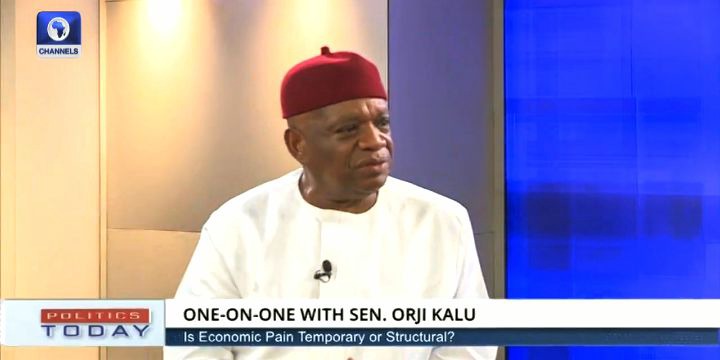
A live broadcast of Channels Television’s Politics Today on Wednesday, August 5, 2026, witnessed a tense exchange between Senator Orji Uzor Kalu and the programme’s anchor, Seun Okinbaloye, during a discussion focused on economic policies, governance and the state of the nation.
The disagreement began when Okinbaloye questioned the former Abia State governor on issues surrounding government financial decisions, particularly the printing of money, his position on the policy and its possible impact on Nigeria’s economy.
The presenter also raised broader concerns about the country’s economic difficulties, including the increasing pressure faced by citizens due to rising living costs and other financial challenges.
As the interview progressed, the conversation became more intense, with Kalu expressing displeasure over the line of questioning. The senator accused the host of moving beyond professional journalism and suggested that the interview had taken the form of an aggressive confrontation rather than a balanced discussion.
Kalu argued that public figures invited for interviews should be engaged through constructive questioning rather than what he described as unnecessary pressure.
“You cannot invite people here just to attack or intimidate them. This is no longer an interview,” Kalu said during the exchange.
However, Okinbaloye rejected the accusation, explaining that his questions were part of his responsibility as a journalist to seek answers from political leaders on issues affecting the public.
The presenter maintained that holding elected officials accountable through challenging questions is an important role of the media, especially when discussing policies that directly affect millions of Nigerians.
The back-and-forth continued as both sides defended their positions, with Kalu responding to questions about economic decisions, government actions and his assessment of the country’s current financial situation.
The heated moment quickly attracted public attention, particularly on social media platforms, where viewers shared different opinions about the encounter.
Some commentators supported Okinbaloye, arguing that journalists have a duty to ask difficult questions and demand explanations from public officials, especially on matters involving the economy and citizens’ welfare.
Others felt the questioning became too forceful and believed political interviews should maintain a more balanced approach that allows guests to explain their views without feeling pressured.
The disagreement formed part of a larger conversation about Nigeria’s economic challenges, government policies and the measures being taken to address inflation, hardship and the rising cost of living.
With the 2027 general elections approaching, economic issues have remained a major subject of political debate, with opposition figures, government representatives and citizens closely examining policies introduced by the administration.
The exchange between Kalu and Okinbaloye highlighted the growing public interest in discussions surrounding accountability, governance and the role of the media in questioning leaders over decisions that affect the country.