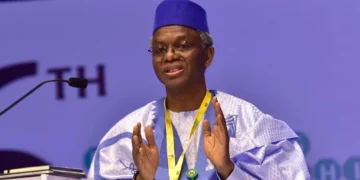



The prosecution of former Kaduna State Governor Nasir El-Rufai by the Independent Corrupt Practices and Other Related Offences Commission (ICPC) has become one of Nigeria’s most closely watched legal battles. Beyond the personalities involved, the case presents an important opportunity to test the country’s commitment to accountability, due process and the rule of law.
El-Rufai, alongside his former adviser Jimi Lawal and several companies, is facing charges linked to the multi-billion-naira Kaduna State CCTV surveillance project. All the defendants have pleaded not guilty, meaning the burden now rests on the prosecution to establish its case beyond reasonable doubt. Until then, every accused person is entitled to the constitutional presumption of innocence.
As proceedings unfold, public attention should naturally be directed toward the evidence. Nigerians deserve to know whether procurement regulations were followed, whether public funds were properly managed and whether the CCTV project delivered the value expected from such a significant investment. These are questions that only a court, after examining documents and hearing witnesses, can answer.
However, the conversation has increasingly shifted away from the substance of the charges. Medical concerns, disagreements over court procedures, applications filed by the defence and exchanges between supporters and investigators have dominated headlines, leaving the allegations themselves in the background.
This trend is hardly new. High-profile corruption cases in Nigeria often become consumed by procedural disputes long before the court begins examining the facts. Legal objections, interlocutory applications and public exchanges frequently overshadow the central issues, delaying the search for answers that citizens expect from the justice system.
There is nothing unlawful about a defendant seeking medical treatment or filing applications permitted under the law. Every accused person has the right to adequate healthcare and a fair hearing before an impartial court. Those protections are fundamental to any democratic legal system and should be respected regardless of the identity of the defendant.
At the same time, Nigerians are increasingly eager to see major corruption cases progress beyond preliminary arguments. After years of lengthy prosecutions that produced more legal drama than substantive outcomes, many citizens simply want the evidence tested openly and the court allowed to reach a verdict based on the facts.
The responsibility for ensuring that happens rests with every party involved. The ICPC must present a well-prepared case supported by credible witnesses, financial records and documentary evidence. The strength of any anti-corruption agency lies not in public statements but in its ability to prove allegations before a competent court.
The defence also has a vital role to play. While challenging evidence and protecting the rights of the accused are legitimate legal strategies, the ultimate objective should remain the fair determination of the issues before the court rather than prolonged procedural contests that distract from the main case.
Public commentary surrounding the trial should equally be measured. Political interventions and attempts to influence public opinion risk undermining confidence in a process that ought to remain independent. Once a matter is before the court, the strongest arguments should come from the courtroom, not from media campaigns or political platforms.
Ultimately, this trial is bigger than any individual. It is a test of Nigeria’s justice system and its ability to handle allegations involving influential public figures fairly and transparently. Whether the prosecution secures a conviction or the defendants are acquitted, what matters most is that the verdict is based solely on credible evidence, due process and the rule of law. Only then will the outcome strengthen public confidence in the country’s institutions and reinforce the principle that justice must be guided by facts, not public sentiment.