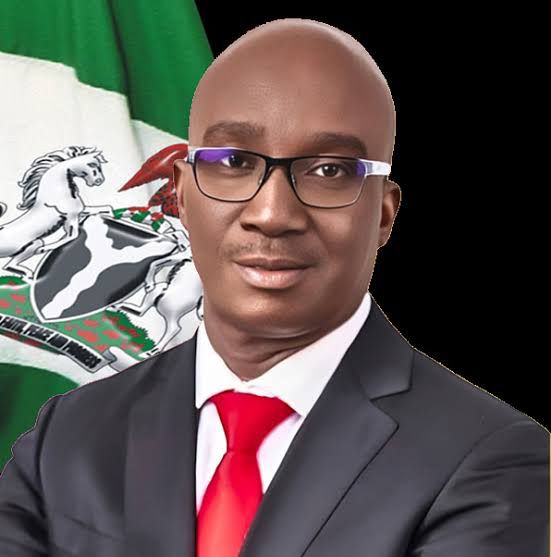
Governor Senator Monday Akinola Okpebholo of Edo State has said his administration has laid a solid foundation that will support President Bola Ahmed Tinubu’s bid for re-election in 2027, highlighting his government’s achievements and alignment with the federal agenda.
Okpebholo made the remarks while speaking at a meeting with political stakeholders and community leaders in Irrua, the Edo State capital, where he outlined the progress recorded in the state since he took office. The governor emphasised that the strides made in infrastructure, economic empowerment and service delivery reflect a shared vision with the Tinubu administration’s Renewed Hope Agenda — a blueprint aimed at revitalising Nigeria’s economy and governance.
According to Okpebholo, his government’s commitment to good governance, grassroots engagement and inclusive development has not only deepened confidence among Edo residents but also created a platform for rallying support for the ruling party’s presidential project. He said that strong local government structures, credible programmes and public trust are essential ingredients for generating electoral support when the time comes.
“We have worked hard to build confidence in government and improve the lives of our people,” Okpebholo said. “These efforts will be critical in mobilising support for our party and for President Tinubu’s re-election campaign.”
The governor also expressed gratitude to party members and supporters for their continued loyalty, urging them to stay focused on sustaining development and maintaining unity within the party. He reiterated that Edo State’s progress should be replicated across the country to ensure nationwide buy-in for the Renewed Hope Agenda as election season approaches.
Political observers say Okpebholo’s comments signal early alignment between state and federal objectives, as ruling party governors seek to demonstrate performance and mobilise grassroots support ahead of 2027. They contend that such statements play a dual role in governance and political strategy, especially in states where the ruling party aims to strengthen its electoral base.
Okpebholo’s remarks also come amid broader discussions about regional contributions to the national project, with governors from various geopolitical zones engaging in consultations to reinforce the ruling party’s messaging and policy implementation. These engagements are seen as part of efforts to build cohesion and present a united front for the next general election.
Analysts note that state-level achievements often influence public perceptions of federal leadership, particularly where local results on job creation, public services and infrastructure are visible. In Edo State, projects spanning roads, education programmes and community empowerment initiatives have been highlighted by supporters as testimony to the governor’s focus on impact-driven governance.
Supporters at the event welcomed Okpebholo’s appraisal of the state’s progress, saying it reflects a pragmatic approach to leadership that prioritises results and citizen welfare. Many believe that state achievements, when effectively communicated, can translate into broader political support for allied candidates and agendas.
While the political landscape ahead of 2027 remains competitive, Okpebholo’s affirmation of alignment with the Renewed Hope Agenda underscores how ruling party governors are positioning themselves and their states as contributors to national stability, development and electoral success.