

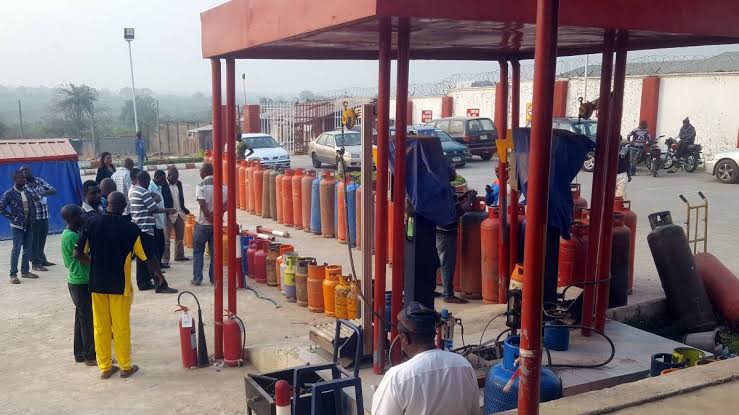
Civil society organisations have criticised the 44.51 per cent year-on-year rise in the cost of cooking gas in Nigeria, warning that the surge will deepen poverty, drive households towards unsafe alternatives, and threaten environmental sustainability.
According to the July 2025 Liquefied Petroleum Gas Price Watch Report released by the National Bureau of Statistics, the average cost of refilling a 12.5kg cylinder climbed from N14,261.57 in July 2024 to N20,609.48 in July 2025.
Speaking separately with The PUNCH, representatives of CSOs lamented the toll of the price hike on Nigerians’ living conditions. The Country Director of ActionAid Nigeria, Andrew Mamedu, described the development as “a bad signal” with grave socio-economic consequences.
Mamedu also faulted the government’s failure to effectively address inefficiencies in the sector. He noted that despite policies to check gas prices, issues such as gas flaring and logistical bottlenecks in the Niger Delta persist. He urged authorities to introduce practical measures such as easing transportation costs, providing to operators, or considering subsidies to make gas more affordable.
Similarly, Munachi Ugochukwu, Programme Officer at Christian Aid Nigeria’s Governance and Rights Programme, emphasised the need for a coordinated government strategy to stabilise the market. He called for inclusive engagement among regulators, investors, and operators to balance competition and consumer protection.
According to him, the Dangote Refinery’s plan to produce over 22,000 tonnes of LPG daily offers an opportunity to bring down prices. However, he noted that resistance from other industry players, who fear monopoly, may complicate the situation. “Ordinary consumers would welcome cheaper gas, but the government must intervene through the Ministry of Petroleum Resources and the Federal Competition and Consumer Protection Commission to ensure fair competition,” he said.
CSOs also warned that the sustained rise in gas prices undermines Nigeria’s policy of encouraging households to adopt cleaner cooking fuels. The trend risks reversing gains made in reducing dependence on biomass and curbing environmental degradation.
The latest surge contrasts with July 2024, when cooking gas prices actually fell by 9.37 per cent month-on-month, from N15,736.27 in June to N14,261.57. In a bid to stem rising costs, the Federal Government had also stopped the export of locally produced cooking gas in October 2024 to boost domestic supply. The policy, announced by the Minister of State for Petroleum Resources (Gas), Ekperikpe Ekpo, took effect in November 2024.
Despite these measures, CSOs maintain that stronger action is needed. They argue that unless government urgently addresses systemic challenges in the gas sector, Nigerians will continue to suffer from volatile prices, worsening poverty, and environmental risks.