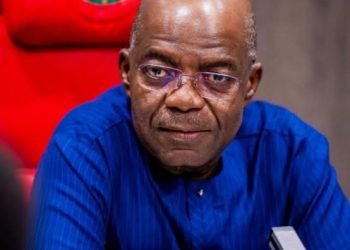


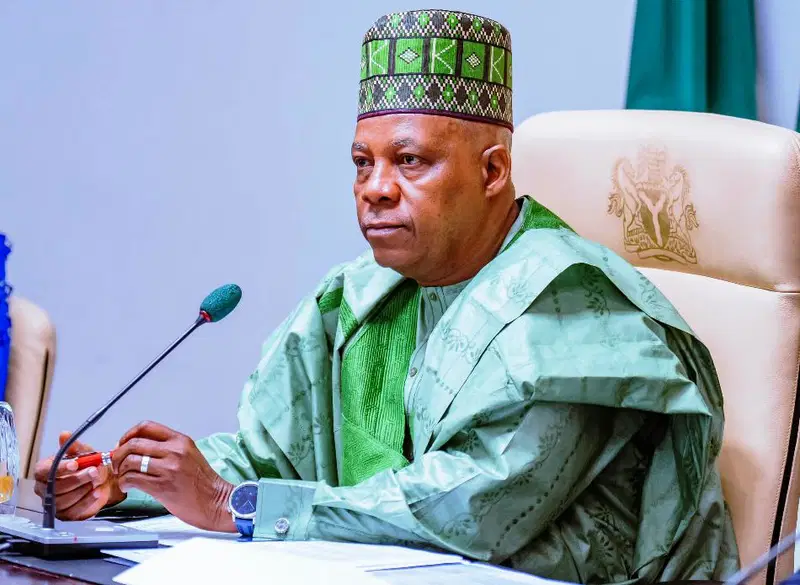
Nigeria’s Vice President, Kashim Shettima; Minister of Finance, Wale Edun; Governor of the Central Bank of Nigeria (CBN), Olayemi Cardoso; and President of the Chartered Risk Management Institute of Nigeria (CRMI), Kevin Ugwuoke, have urged for the institutionalization of risk management as a culture across the nation, stressing that it must go beyond policy frameworks to become an everyday mindset.
The call was made on Thursday in Lagos at the 24th Annual International Conference of CRMI, which had as its theme “Global Risks, Local Solutions.” The gathering served as a platform for stakeholders in the public and private sectors, as well as international participants, to address urgent global challenges such as climate change, financial volatility, disruptive technologies, cybersecurity threats, and public health risks.
Vice President Shettima, represented by Nurudeen Zauro, Technical Adviser to the President on Economic and Financial Inclusion, warned that the risks confronting Nigeria are neither distant nor abstract but pressing and immediate. He identified climate change, cybersecurity, terrorism, pandemics, and emerging technologies such as artificial intelligence and blockchain as critical threats already shaping the nation’s environment. He stressed that risk management must not remain the preserve of experts but should be embraced by leaders, institutions, and citizens alike. According to him, “Preparedness is not a luxury but the foundation of stability and prosperity. Ultimately, this is about ensuring that no Nigerian is left behind.”
CBN Governor Cardoso, represented by Blaise Ijebor, Director of Risk Management at the apex bank, explained that Nigeria’s economy is already facing the strain of global shocks, including supply chain disruptions, capital flow reversals, and extreme weather events. He noted that the CBN’s policy reforms were designed to restore economic stability by embedding risk awareness into financial and policy decisions. Cardoso emphasized the need for risk managers to step out of the background and play a more active role in shaping national solutions. “We must anticipate both lean years and fat years and prepare accordingly,” he said, commending CRMI for promoting sound risk practices within Nigeria’s financial system.
Finance Minister Wale Edun, represented by Raymond Omachi, Permanent Secretary in the Finance Ministry, reiterated that the government’s economic reforms, including fuel subsidy removal and exchange rate unification, were painful but necessary measures to place Nigeria on a path to sustainable growth. He argued that while challenges remain, resilience and foresight will define Nigeria’s progress. “The future will not be determined by the storms we face but by the solutions we craft together,” he said, insisting that risk management is not about predicting the future but about preparing for it.
On his part, CRMI President Kevin Ugwuoke stressed that risk should not only be viewed as a threat but also as an enabler of innovation and competitiveness. He described the conference as a platform where policymakers, regulators, business leaders, academics, and practitioners could jointly chart strategies to transform vulnerabilities into opportunities. “Risk is not merely about uncertainty; it is equally about opportunity. Managed with foresight and vision, it can be a catalyst for growth and resilience,” he stated.