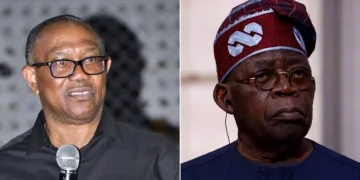


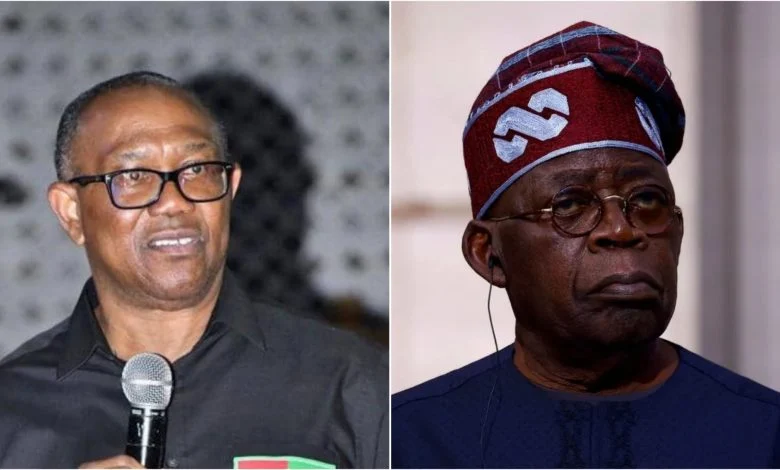
The All Progressives Congress (APC) Presidential Campaign Council has called on Peter Obi to reconsider his participation in the 2027 presidential contest, citing his earlier promise to step aside if evidence emerges that he accumulated debts while serving as governor of Anambra State.
The council also faulted the former presidential contender over comments concerning the outcome of Nigeria’s 2023 general election, accusing him of making assertions that were not backed by verifiable proof.
According to the campaign organisation, its spokesperson, Dele Alake, criticised Obi, who is now associated with the National Democratic Congress (NDC), for maintaining that he won the previous presidential election despite acknowledging that he could not provide evidence to substantiate the position.
Obi had reportedly insisted that he emerged victorious in the 2023 poll, while arguing that his claim did not necessarily depend on documentary evidence.
His remarks subsequently drew a response from Alake, who expressed concern over the statement and accused the former Anambra governor of placing personal convictions above facts when discussing the election results.
The APC campaign council maintained that claims relating to electoral outcomes should be supported by credible information rather than individual assertions.
Alake further argued that Obi’s continued declaration of victory was difficult to reconcile with the official results announced after the 2023 presidential election, in which the former Labour Party candidate was placed third.
He suggested that Obi’s position raised concerns about the standard of evidence being applied by a politician seeking another opportunity to contest for Nigeria’s highest political office.
The APC representative also questioned the appropriateness of the comments, arguing that individuals aspiring to become president should demonstrate a commitment to factual accuracy when discussing important national issues.
According to him, public statements made by presidential hopefuls carry considerable significance because they can influence citizens’ understanding of the country’s political processes and electoral institutions.
Alake also challenged the basis for Obi’s assertions, alleging that the former governor had made claims without providing sufficient material to establish their validity.
He maintained that political arguments should be grounded in information that can be independently examined, particularly when they concern the outcome of a nationwide election.
The council’s criticism extended to Obi’s reported commitment to withdraw from the 2027 presidential race if allegations of financial liabilities connected to his time as Anambra governor were established.
By referring to the pledge, the APC campaign body called on him to honour his stated position, although the demand represents the council’s political stance rather than an established legal requirement.
The controversy has added another dimension to the political exchanges surrounding the next presidential election, with competing political figures continuing to debate past electoral outcomes, public accountability and the credibility of statements made by prospective candidates.
Obi previously contested the presidency under the Labour Party during the 2023 general election, while the APC’s Bola Tinubu was declared the winner by the Independent National Electoral Commission (INEC).
The latest remarks from the campaign council reflect its disagreement with Obi’s interpretation of that election and its position on his participation in the forthcoming presidential contest.
However, the council’s accusations concerning the former governor’s statements remain attributed claims, and its criticism does not independently establish whether Obi’s assertions or the allegations about financial liabilities are supported by evidence.
The exchange highlights the continuing political dispute between Obi and figures associated with the ruling party as preparations and discussions surrounding the 2027 election gather attention.