

PORT HARCOURT, Nigeria — August 24, 2026
Former Liberian President George Weah has delivered a pointed rebuke to Africa’s political class, warning that leaders who win office through the ballot box can still become despots if they hollow out the institutions meant to restrain them.
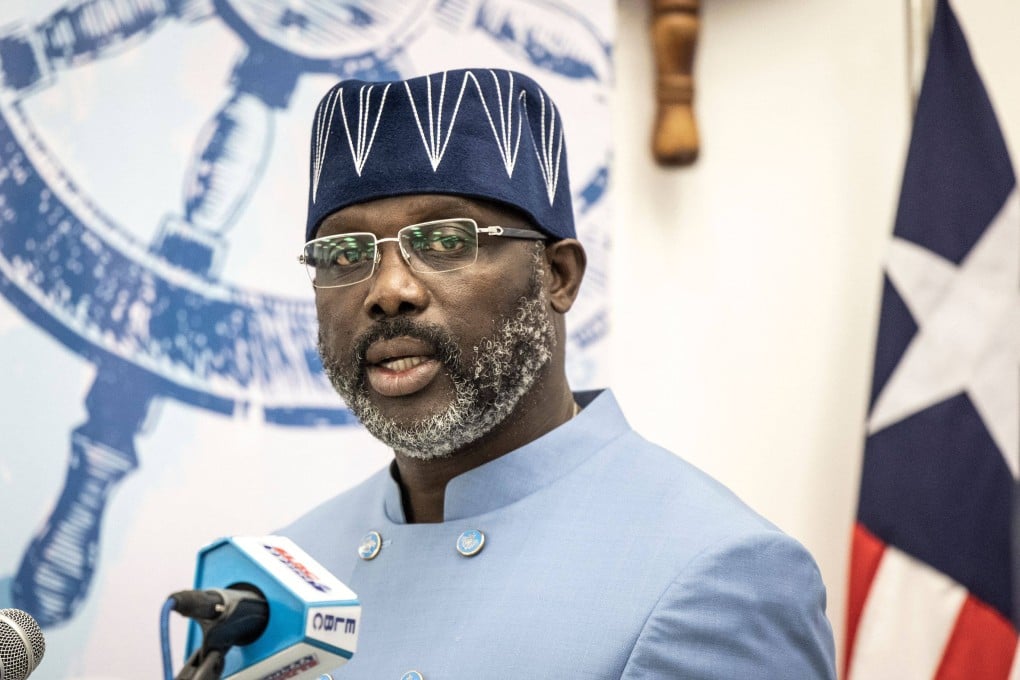
Delivering the keynote address at the opening of the Nigerian Bar Association’s (NBA) 66th Annual General Conference in Port Harcourt, Rivers State, on Sunday, Weah argued that democracy’s greatest dangers do not always announce themselves through coups or through defeated candidates who refuse to hand over power. Just as often, he said, democracy is undone gradually — by elected leaders who lean on the courts, sideline the legislature, and turn the machinery of state into an instrument of personal control.
Speaking under this year’s conference theme, “Beyond Limits,” the former Liberian leader put it bluntly: a leader who governs like a strongman does not stop being one simply because he holds a certificate declaring him the winner of an election.
Weah’s message was aimed squarely at Nigeria’s legal community, whom he urged to serve as a bulwark against executive overreach. He said democracy is not settled on election night but is tested continuously, by whether courts can rule without seeking political cover and whether lawmakers can function as a check on the presidency rather than a rubber stamp for it. An independent judiciary, he argued, is not a courtesy extended by government — it is the guarantee that keeps democratic government honest.
He went further, cautioning against subtler forms of institutional sabotage: leaders who starve courts of funding or lean informally on judges can weaken the rule of law just as effectively as outright interference in verdicts. A judicial ruling, he said, ought to carry force on its own, without waiting for a nod from the political establishment.
Weah, who governed Liberia from 2018 to 2024 after a career as one of the finest footballers of his generation, pointed to his own exit from power as proof that his warning was not merely rhetorical. He recalled conceding Liberia’s November 2023 presidential election to his successor, Joseph Boakai, before the final results were officially declared — a decision he said some of his own allies had urged him to resist by contesting disputed figures.
He told delegates that he chose instead to accept the outcome because, in his view, the will of the people has to outweigh the ambitions of any single leader for a democracy to hold together. That concession has often been cited across the region as a rare instance of a sitting African president relinquishing power without a fight.
Weah’s remarks land at a moment when concerns about democratic backsliding persist across parts of Africa, from contested elections to disputes over judicial independence and executive term limits. By framing the threat not just as coups or strongman rule imposed by force, but as the slow erosion of checks and balances by leaders who arrived in office legitimately, Weah situated his warning within a broader debate about what it actually takes to sustain democratic governance once the votes have been counted.
Rivers State Governor Siminalayi Fubara, who also addressed the conference, echoed a related theme, describing the judiciary as indispensable to democratic governance and urging judges to act as a genuine refuge for citizens seeking accountability, regardless of political pressure.
The NBA conference, themed “Beyond Limits,” drew tens of thousands of lawyers to Port Harcourt and featured a lineup of speakers from Nigeria’s legal, political and civic sectors. Organisers said Weah’s selection as keynote speaker was intended to broaden the conference’s focus beyond Nigeria’s domestic legal debates and into a continental conversation about governance and the rule of law.
Weah closed his address by urging lawyers to see themselves as democracy’s last line of defence — the professionals whose vigilance determines whether courts remain an independent shield for citizens or become just another arm of executive power.