

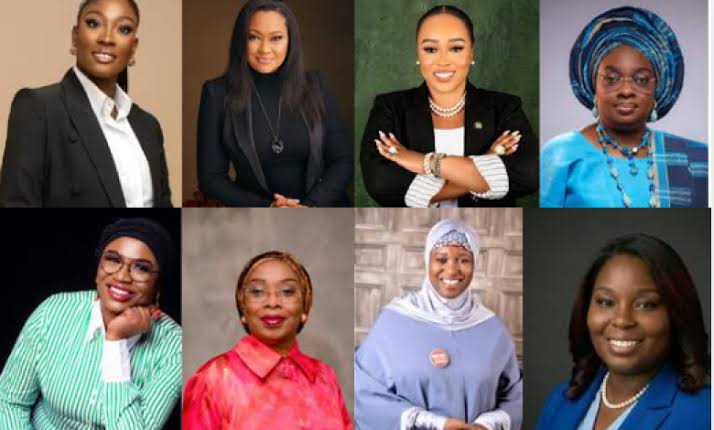
Nigeria is approaching the 2027 general elections at a time when an unprecedented number of women occupy some of the most influential positions in the country’s legal system.
For the first time, women are simultaneously occupying key positions across the Supreme Court, Court of Appeal, Nigerian Law School and Nigerian Bar Association. At the centre of this historic development are Chief Justice of Nigeria, Justice Kudirat Kekere-Ekun; President of the Court of Appeal, Justice Monica Bolna’an Dongban-Mensem; Director-General of the Nigerian Law School, Dr Olugbemisola Titilayo Odusote; and NBA President-elect, Oyinkansola Badejo-Okusanya, SAN.
Their emergence is significant because Nigeria’s judiciary has increasingly become central to the country’s electoral and political process.
From presidential and governorship elections to National Assembly contests, disputes over election results frequently end up before the courts. In many cases, the final word rests with the judiciary.
That makes the women currently occupying these strategic positions potentially important players in the institutional environment surrounding the 2027 elections.
However, their emergence also comes with difficult questions about judicial independence, political pressure, public confidence and the ability of the courts to withstand interference from powerful political interests.
The 2027 Question
Nigeria’s political history shows that election disputes can fundamentally alter the outcome of elections.
When politicians challenge election results, the courts are often called upon to determine whether elections were properly conducted, whether votes were validly counted and whether electoral laws were followed.
The influence of the judiciary was particularly evident after the 2023 elections, when hundreds of election-related cases were filed across the country.
The experience of former President of the Court of Appeal Justice Amina Muktar, according to the material provided, also illustrates the enormous political pressure that can surround election cases.
Senator Musa Bukachuwa, who was married to Justice Muktar, reportedly disclosed after the 2023 electoral disputes that politicians approached him seeking to influence his wife over cases before the Court of Appeal.
That revelation underscores the extraordinary pressure that judicial officers can face when electoral disputes involve powerful political actors.
With the 2027 elections expected to be another fiercely contested political battle, the independence of the judiciary will therefore be closely watched.
Justice Kudirat Kekere-Ekun: At the Top of the Judiciary
At the apex of Nigeria’s judicial system is Justice Kudirat Motonmori Olatokunbo Kekere-Ekun, the Chief Justice of Nigeria and head of the Supreme Court.
Her appointment marked another milestone in the history of women in Nigeria’s judiciary. She became only the second woman to occupy the office of Chief Justice of Nigeria, following Justice Aloma Mukhtar.
Justice Kekere-Ekun was born on May 7, 1958, in London.
She comes from a distinguished Lagos family. Her father, the late Senator Hassan Fasinro, was a lawyer, politician and author who served during Nigeria’s Second Republic. Her mother, Winifred Ogundimu, was a UK-trained public health nurse who worked in the Lagos State Civil Service.
Kekere-Ekun attended Queen’s College, Lagos, before studying Law at the University of Lagos.
She obtained her LL.B in 1980 and was called to the Nigerian Bar in 1981. She subsequently obtained an LL.M from the London School of Economics and Political Science in 1983.
She began her legal career in private practice before joining the Lagos State Judiciary in 1989.
She rose from the magistracy to become a High Court judge in 1996 and later served as chairperson of the Robbery and Firearms Tribunal in Lagos.
Her elevation continued when she was appointed to the Court of Appeal in 2004.
In 2013, she was appointed a Justice of the Supreme Court, becoming the fifth woman to reach Nigeria’s highest court and, at the time, the youngest woman to achieve that position.
On August 22, 2024, she became Acting Chief Justice following the retirement of Justice Olukayode Ariwoola.
She was subsequently confirmed as substantive Chief Justice on November 30, 2024.
The Controversy Around Kekere-Ekun
Despite her extensive judicial career, Kekere-Ekun’s position has not been without controversy.
Critics have questioned aspects of her emergence and some of the major judgments in which she participated, particularly politically sensitive electoral cases.
One of the most frequently discussed cases associated with her judicial career is the Imo State governorship case, which eventually resulted in Hope Uzodimma becoming governor despite finishing fourth in the initial election results announced by INEC.
The judgment generated enormous public controversy and contributed to Uzodimma being labelled by critics as the “Supreme Court governor.”
The Supreme Court’s handling of other politically sensitive matters has also attracted criticism from sections of the public and political class.
Supporters of the judiciary, however, argue that judges must make decisions according to the law and evidence before them, rather than according to public opinion.
That distinction will be particularly important in 2027.
If the presidential or governorship elections generate major disputes, Justice Kekere-Ekun and her colleagues could once again find themselves at the centre of Nigeria’s political conversation.
Justice Monica Dongban-Mensem: The Court of Appeal Gatekeeper
Another critical figure is Justice Monica Bolna’an Dongban-Mensem, the President of the Court of Appeal.
The Court of Appeal is particularly important during elections because it handles a large number of electoral disputes, especially cases involving governorship and National Assembly elections.
Dongban-Mensem was born on June 13, 1957, in Plateau State.
She studied at Ahmadu Bello University, Zaria, obtaining her bachelor’s and master’s degrees before undertaking further legal studies in London.
She was called to the Nigerian Bar in 1980.
Her judicial career began as a magistrate in Plateau State in 1981.
She later served in several administrative positions within the judiciary before becoming a High Court judge.
She was elevated to the Court of Appeal in 2003, where she served in several divisions and eventually became Presiding Justice of the Enugu Division.
In 2020, she became President of the Court of Appeal.
Her appointment itself generated political controversy, with questions raised about the circumstances surrounding her elevation and the process of confirming her appointment.
Since taking charge of the Court of Appeal, she has focused on administrative reforms, case management and reducing the backlog of cases.
The court has also sought to improve the speed at which cases are processed.
This will become particularly important during the 2027 electoral cycle.
With thousands of electoral disputes potentially heading to the courts, the Court of Appeal could once again become one of the busiest and most politically sensitive institutions in Nigeria.
Dr Olugbemisola Odusote: Woman Leading the Nigerian Law School
The third major figure is Dr Olugbemisola Titilayo Odusote, the Director-General of the Nigerian Law School.
Her appointment is historically significant because she became the first woman to lead the Nigerian Law School since its establishment in 1962.
Born in 1969, Odusote studied Law at Obafemi Awolowo University.
She was called to the Nigerian Bar in 1988 and subsequently obtained an LL.M from OAU.
She later earned a PhD in Law from the University of Surrey in the United Kingdom, specialising in public law and the administration of justice.
Her career at the Nigerian Law School began in 2001 as a lecturer.
Over more than two decades, she rose through several positions, including Head of the Academic Department, Director of Academics and Head of Campus.
Before becoming Director-General, she was Deputy Director-General and Head of the Lagos Campus.
On January 10, 2026, President Bola Ahmed Tinubu appointed her Director-General for a four-year term.
Her position may not have the same direct electoral power as that of the Chief Justice or Court of Appeal President, but it is strategically important because the Nigerian Law School helps shape the lawyers who will eventually become judges, advocates, prosecutors and legal advisers.
Her leadership could therefore influence the future culture of Nigeria’s legal profession.
Oyinkansola Badejo-Okusanya: A Historic Moment for the Nigerian Bar
The fourth woman is Oyinkansola Badejo-Okusanya, SAN, who is set to become the President of the Nigerian Bar Association.
Her emergence adds another important dimension to the historic concentration of female leadership within Nigeria’s legal profession.
Badejo-Okusanya was born on January 15, 1967, in Lagos.
She comes from a distinguished academic family. Her father, the late Professor Olufolabi Olumide, was a surgeon and former Vice-Chancellor of Lagos State University, while her mother, Clara Olumide, was the first female Registrar of the University of Lagos.
She initially studied English at the University of Lagos before returning to study Law.
She was called to the Nigerian Bar in 2002 and built a career specialising in litigation and commercial law.
She also served as Senior Special Assistant on Justice Sector Reform to former Lagos State Governor Babatunde Fashola, contributing to reforms in the state’s justice system.
In September 2025, she became a Senior Advocate of Nigeria.
On July 19, 2026, she won the Nigerian Bar Association presidential election with 12,317 votes, representing 47.18 per cent of the total, making her the first woman elected President of the NBA.
Her tenure could place her at the forefront of debates over judicial independence, constitutional reform, electoral justice and the rule of law.
Why Their Positions Matter for 2027
The significance of these four women goes beyond gender.
The real issue is institutional power.
The Chief Justice leads the Supreme Court.
The President of the Court of Appeal oversees the court that determines thousands of important election-related cases.
The Director-General of the Nigerian Law School oversees the institution responsible for training future members of the legal profession.
The NBA President represents one of the country’s most influential professional bodies and can play an important role in national conversations about justice, democracy and the rule of law.
Together, these positions give women an unprecedented presence at the commanding heights of Nigeria’s legal system.
But the central question is whether this unprecedented female leadership will translate into greater public confidence in the judiciary.
Can Women Change the Perception of Nigeria’s Judiciary?
For years, Nigeria’s judiciary has faced criticism over allegations of political influence, delays in justice delivery and controversial electoral judgments.
Some Nigerians believe the judiciary has not always done enough to protect the sanctity of elections.
Others argue that judges are unfairly blamed for political failures that originate from political parties, electoral institutions and politicians themselves.
The 2027 election will provide another major test.
If election disputes reach the courts, Nigerians will be watching closely to see whether judges apply the law consistently regardless of the political identity or influence of the parties involved.
The women currently leading the legal system will therefore face enormous expectations.
The Bigger Political Question
The issue is not simply whether women can lead Nigeria’s judiciary.
They already are.
The bigger question is whether they can help create a judiciary that Nigerians believe is independent, impartial, efficient and capable of protecting electoral justice.
The 2027 elections could provide the biggest test yet.
If the elections are closely contested, the judiciary may ultimately determine who governs some of Nigeria’s most important states—and potentially influence the country’s political direction.
That means the decisions made in courtrooms after the votes are counted could become just as important as what happens at polling stations.
And with Justice Kudirat Kekere-Ekun, Justice Monica Dongban-Mensem, Dr Olugbemisola Odusote and Oyinkansola Badejo-Okusanya occupying key positions, the role of women in shaping Nigeria’s legal and democratic future has never been more significant.