

Concerned Nigerian Professionals Raise Alarm Over Rule of Law, Democracy at Abuja Press Conference
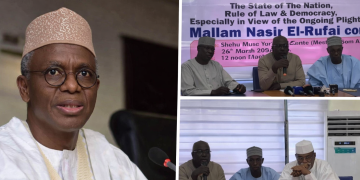
A group known as the Concerned Nigerian Professionals and ESG Association has expressed deep concerns over what it described as the declining state of the rule of law and democracy in Nigeria, particularly citing the ongoing legal challenges involving former Kaduna State governor, Nasir El-Rufai.
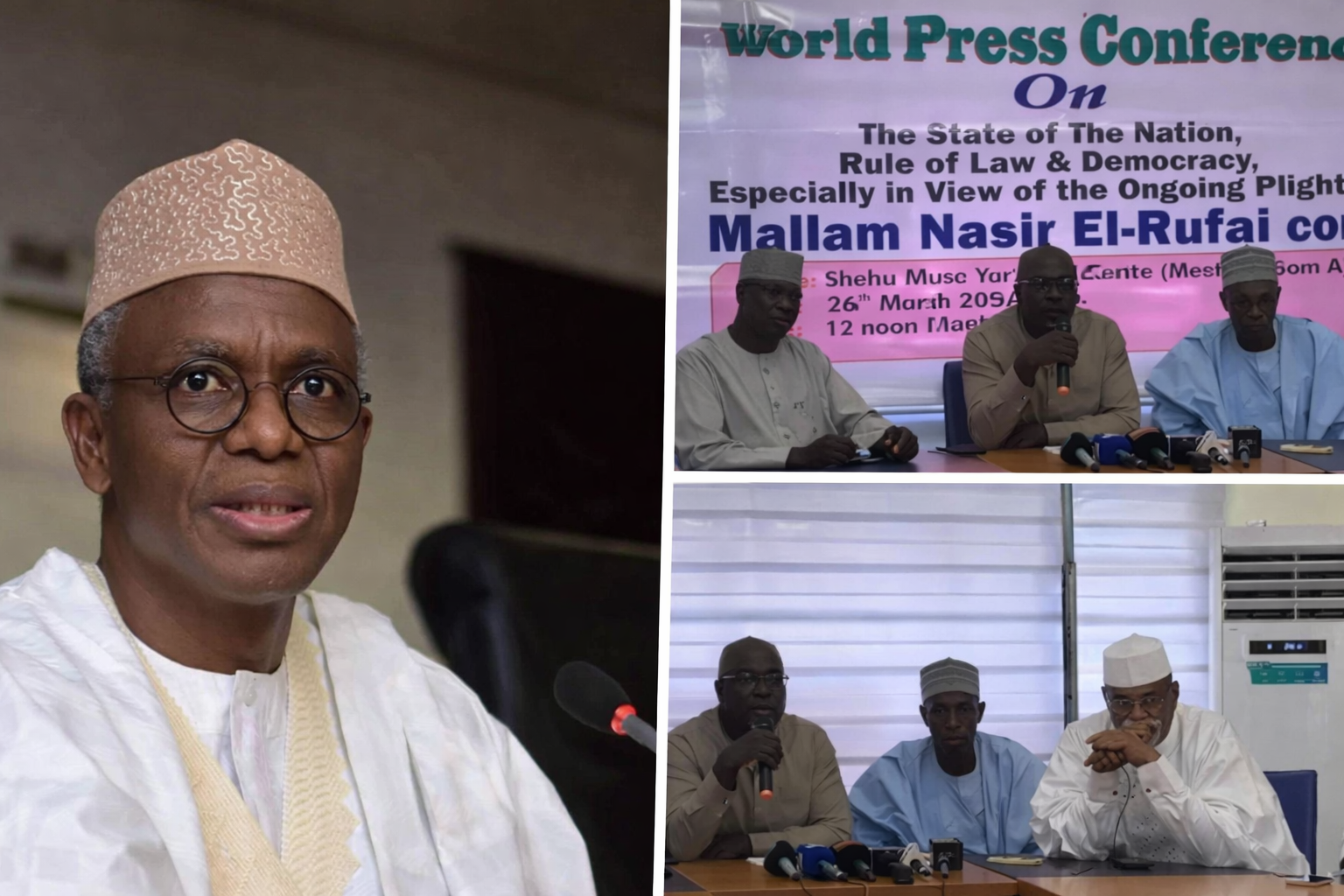
Speaking during a joint world press conference held on Thursday at the Shehu Musa Yar’Adua Centre in Abuja, the group said Nigeria’s democratic journey since 1999 has faced numerous challenges, but noted that current developments suggest increasing threats to democratic principles.
Addressing journalists, the group questioned whether Nigeria is truly operating a democratic system or merely a civilian government, stressing that democracy must be built on the rule of law, credible elections, protection of lives and property, and respect for fundamental human rights.
The association raised concerns about the country’s security situation, describing it as worrying, while also expressing doubts about the credibility of the electoral process ahead of the 2027 general elections.
Focusing on the rule of law, the group outlined key legal principles such as lawful detention, due process in arrests, timely arraignment of suspects, presumption of innocence, access to bail, and respect for court orders, arguing that these principles must be upheld to sustain democracy.
The professionals referenced the case involving El-Rufai, noting that he honoured invitations from anti-corruption agencies after returning to the country voluntarily. They questioned the circumstances surrounding his arrest and prolonged detention, stating that such actions raise constitutional and legal concerns.
According to the group, El-Rufai was first detained by the Economic and Financial Crimes Commission before being transferred to the custody of the Independent Corrupt Practices and Other Related Offences Commission, where he reportedly remained for several weeks before being formally arraigned.
They argued that prolonged detention during investigations, especially for non-capital offences, raises questions about adherence to constitutional provisions guaranteeing personal liberty and fair hearing within a reasonable time.
The association also expressed worries about what it described as selective application of justice and alleged politicisation of law enforcement institutions, warning that such perceptions could erode public trust in democratic institutions.
The group further called attention to concerns about judicial processes, including delays in hearing fundamental rights cases and what it described as stringent bail conditions, which it said could undermine constitutional guarantees.
While emphasizing that no individual is above the law, the group maintained that due process must be followed in all cases to avoid what it termed persecution or malicious prosecution.
The association warned that failure to uphold the rule of law could weaken public confidence in institutions, politicise law enforcement, and weaken the protection of citizens’ rights.
As part of its recommendations, the group called on Nigerians, civil society organisations, and members of the Council of State to speak out against alleged abuses of due process.
It also urged the Chief Justice of Nigeria and the National Judicial Council to strengthen oversight of judicial processes to protect the integrity of the courts.
The group further appealed to the Attorney-General of the Federation, the Inspector-General of Police, and heads of security and anti-corruption agencies to ensure their operations strictly follow constitutional provisions and respect human rights.
They also called on President Bola Ahmed Tinubu to ensure that democratic principles and the rule of law are protected, urging him to safeguard Nigeria’s democratic legacy.
The press conference was addressed by several members of the association, including Dr Uche Diala, Ahmed Abubakar Goringo, Barrister Nnaemeka Maduagwu, Mohammed Salihu, Tayo Agbaje, Ibrahim Garba Wala, Aminu Datti, and Barrister Adu-Odogwu Philip.