

In a significant development for Nigeria’s infrastructure sector, Deutsche Bank has formally expressed interest in financing major rehabilitation and replacement works on two of Lagos State’s most critical transport arteries: Carter Bridge and Third Mainland Bridge.
The interest was conveyed during a meeting in Abuja on 2 December 2025 between senior officials of Deutsche Bank and the Federal Ministry of Works, led by David Umahi, the Minister of Works. Deutsche Bank’s delegation was headed by Moritz Dornemann, Managing Director and Global Co-Head of Structured Trade and Export Finance, and Andreas Voss, the bank’s Chief Country Representative in Nigeria.
According to a statement released by the Ministry of Works, the bank said it was “impressed by the Federal Government’s resolve to upgrade ageing transport infrastructure,” and applauded President Bola Tinubu’s commitment to delivering large-scale road projects that could stimulate national growth.
Why Carter and Third Mainland?
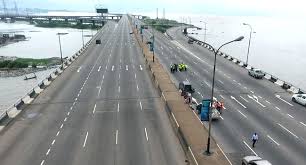
Carter Bridge is one of Lagos’s oldest bridges — historically significant, but severely deteriorated due to age, coastal exposure, and heavy usage. The Ministry of Works has said the bridge’s condition has worsened to the point where replacement is now considered the only viable long-term solution.
Third Mainland Bridge, opened in 1990 and spanning approximately 11.8 kilometres, is the longest and one of the busiest in Lagos. Over decades of continuous heavy traffic and exposure to saltwater corrosion, the bridge’s underwater piles and piers have suffered significant structural damage. Recent underwater assessments revealed erosion, corrosion, and destabilization — prompting the government to consider either full structural rehabilitation or outright replacement.
Estimates for rehabilitating or rebuilding Third Mainland Bridge are staggering: rehabilitation could cost as much as ₦3.8 trillion, while a complete rebuild would run roughly ₦3.6 trillion. For Carter Bridge, the construction of a new bridge has been estimated around ₦359–₦387 billion, depending on the design and financing model adopted.
Given such massive financial requirements, the Federal Government has signalled its openness to Public-Private Partnership (PPP) or financing under an Engineering, Procurement, Construction + Financing (EPC+F) arrangement. The engagement with Deutsche Bank represents the latest effort to draw private-sector and international capital to bridge Nigeria’s infrastructure funding gap.
What the Deal Could Mean
During the meeting, Deutsche Bank officials reportedly also expressed interest in further financing other large-scale road projects — notably the ongoing Lagos–Calabar Coastal Highway — signalling a broader appetite for Nigeria’s infrastructure development agenda.
For the bridges, this could accelerate much-needed structural interventions. According to the Ministry, remedial works currently ongoing on Carter Bridge are only temporary. A full replacement would help eliminate long-term safety risks and traffic disruptions.
For Third Mainland Bridge, a comprehensive underwater repair — which Deutsche Bank indicated interest in financing — is expected to extend the bridge’s useful lifespan by another 50 years. This could prevent a future collapse or forced shutdown, thereby avoiding economic and social costs associated with a long-term closure of Lagos’s busiest bridge.
What remains to be done
Minister Umahi said the projects are set to proceed through an “unbiased procurement process,” and confirmed that Deutsche Bank will be engaged once the successful contractors are selected.
However, even with interested external financiers, major challenges remain. The sheer scale of needed funding — especially for Third Mainland Bridge — means adherence to strict transparency, accountability and timely contract delivery will be vital to ensure that funds result in durable infrastructure.
Further, those hoping for swift construction or rehabilitation should also consider that detailed underwater assessments, design plans, and careful procurement will take time. Given the complexity and magnitude of the works, actual on-ground reconstruction may still be several months away even if financing is secured soon.
A possible turning point for Nigeria’s infrastructure agenda
The interest from Deutsche Bank signals a shift: Nigeria’s infrastructure vision — particularly for roads and bridges — seems to be gaining traction among reputable international financiers. Coupled with ongoing financing of other major projects (such as the Lagos–Calabar Coastal Highway) under loan syndicates led by Deutsche Bank, this could mark a turning point in efforts to close the massive infrastructure deficit facing the country.
If successful, financing and eventual execution of the Carter Bridge replacement and Third Mainland Bridge rehabilitation or reconstruction would deliver not only safer, more dependable transport arteries for Lagos’s millions of residents, but also send a signal to other global investors that Nigeria is open for serious, large-scale infrastructure partnerships.
As discussions continue, all eyes will be on how quickly the financing agreements are finalised, contractors selected, and construction work begins — and whether Nigeria can turn intent into infrastructure reality.

24hrs: NDC Membership Registration Soars in the Face of Court Order to Consider Its Deregistration
A Federal High Court order directing proceedings that could threaten the registration of the newly registered National Democratic Congress (NDC)...