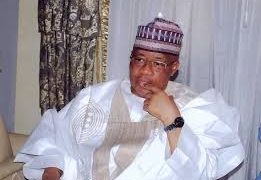


Former Nigerian President Ibrahim Badamasi Babangida has finally broken his silence on the deepening crisis within the People’s Democratic Party (PDP), offering critical guidance and strategic directives to the party’s National Chairman, Kabiru Turaki, on how to rescue and rebuild the opposition party ahead of the 2027 general elections.
The meeting between Babangida, popularly known as IBB, and the PDP National Working Committee (NWC) led by Turaki took place at the former President’s hilltop residence in Minna, Niger state. The visit, which brought together key party stakeholders, represented a significant moment for the troubled opposition party as it seeks wisdom from one of Nigeria’s most experienced political strategists.
According to Turaki, the delegation had originally planned a special appreciation visit to Babangida, but recent security challenges, particularly the wave of abductions in Niger state, necessitated merging the courtesy call with a condolence visit. This dual-purpose engagement underscored both the party’s respect for the elder statesman and its concern for the security situation in the state.
Turaki emphasized during the visit that the party needed guidance from leaders with a deep understanding of Nigeria’s political evolution, recognizing Babangida’s unique position as someone who has witnessed and shaped the country’s political landscape over several decades.
Babangida commended the PDP leadership for demonstrating solidarity with the government and people of Niger state during what he described as one of their most trying periods. His acknowledgment of the party’s gesture reflected the importance of political unity during times of crisis, transcending partisan lines for the greater good of affected communities.
The former military President also took time to reaffirm the PDP’s strong national presence, noting that it remained the most deeply rooted political organization in the country despite its current challenges. This assessment, coming from someone who attempted to engineer Nigeria’s political system, carried significant weight and served as both encouragement and a reminder of the party’s historical importance.
Babangida didn’t shy away from sharing lessons from his own political engineering efforts. The former President recalled his attempt during military rule to institutionalize a two-party system, a move that met resistance from the political class. This historical reference served as a reminder of the complexities of political reform and the resistance that often accompanies attempts to restructure political institutions.
To illustrate the importance of strong party structures, Babangida shared an anecdote about a military administrator he once appointed in Niger state, using this example to demonstrate how proper foundations and structures determine the success or failure of any political organization.
In what observers described as a “tough directive,” Babangida laid out specific steps that Turaki must take to rebuild the fractured party. His advice was both practical and strategic, rooted in decades of political experience.
“While you spoke earlier, you admitted that the party made mistakes and has already set machinery in motion to correct them. I urge you to use tact, seek people’s opinions, and work towards building a peaceful and progressive party. You have the capacity to do it, and I wish you well,” Babangida stated.
The former President’s directive emphasized three critical elements. Babangida stressed the importance of tact in dealing with the various factions and interests within the party, recognizing that heavy-handed approaches could further fracture an already divided organization. Drawing from his experience in political engineering, he advised Turaki to prioritize extensive consultations, ensuring that all stakeholders feel heard and included in the party’s rebuilding process.
The former military leader emphasized the need for inclusive leadership that brings together diverse perspectives and interests within the party, rather than alienating any group.
Sources present at the meeting revealed that Babangida went further with additional specific directives for the NWC. He urged the party leadership to prioritize unity above all else, recognizing that a divided house cannot stand against the formidable challenges ahead. The former President also emphasized the critical need to rebuild trust within the party—trust that has been eroded by internal conflicts, accusations, and counter-accusations among party stakeholders.
Furthermore, Babangida stressed the importance of stabilizing party structures across all states in preparation for future electoral contests, noting that the 2027 elections would require a well-oiled political machine operating efficiently at all levels of government.
Responding to Babangida’s guidance, Chairman Turaki expressed deep appreciation for the elder statesman’s wisdom and goodwill. He assured the former President that the PDP leadership was fully committed to implementing the necessary reforms to restore the party’s competitiveness.
Turaki pledged that the party would focus on resetting its operations, strengthening its organs at all levels, and restoring its winning spirit ahead of the 2027 general elections. His assurances reflected an understanding of the magnitude of the task ahead and the urgency required to turn the party’s fortunes around.
The significance of the meeting was underscored by the presence of notable PDP figures, including former Kano state governor Malam Ibrahim Shekarau, who presented a vote of thanks at the conclusion of the visit. Shekarau commended Babangida for his consistent statesmanship and moral support to the PDP over the years, acknowledging the former President’s role as a father figure in Nigerian politics.
The meeting comes at a critical juncture for the PDP, which has been grappling with internal crises that threaten its viability as a strong opposition party. With the 2027 elections on the horizon, the party faces the enormous challenge of presenting a united front against the ruling All Progressives Congress (APC).
Political analysts have noted that the PDP’s ability to implement Babangida’s directives and resolve its internal contradictions will determine whether it can mount a credible challenge in the next electoral cycle. The party, which governed Nigeria from 1999 to 2015, has struggled to regain its footing since losing power and has been plagued by defections, factional disputes, and leadership challenges.
Babangida’s intervention represents more than just advice from an elder statesman; it’s a call to action for the PDP to rediscover its purpose and rebuild its structures. His emphasis on tact, consultation, and inclusive leadership provides a framework that, if properly implemented, could help the party navigate its current challenges and emerge stronger.
As the 2027 elections approach, all eyes will be on the PDP leadership to see whether they can translate Babangida’s guidance into concrete action. The former President’s confidence in Turaki’s capacity to lead the rebuilding effort offers hope, but the real test will be in the implementation and the party’s ability to demonstrate unity and purpose in the months ahead.
The meeting in Minna may well be remembered as a turning point for the PDP—a moment when the party received the wisdom and direction needed to chart a new course. Whether this translates into electoral success in 2027 remains to be seen, but Babangida has provided the roadmap; it’s now up to Turaki and the party leadership to follow it.