


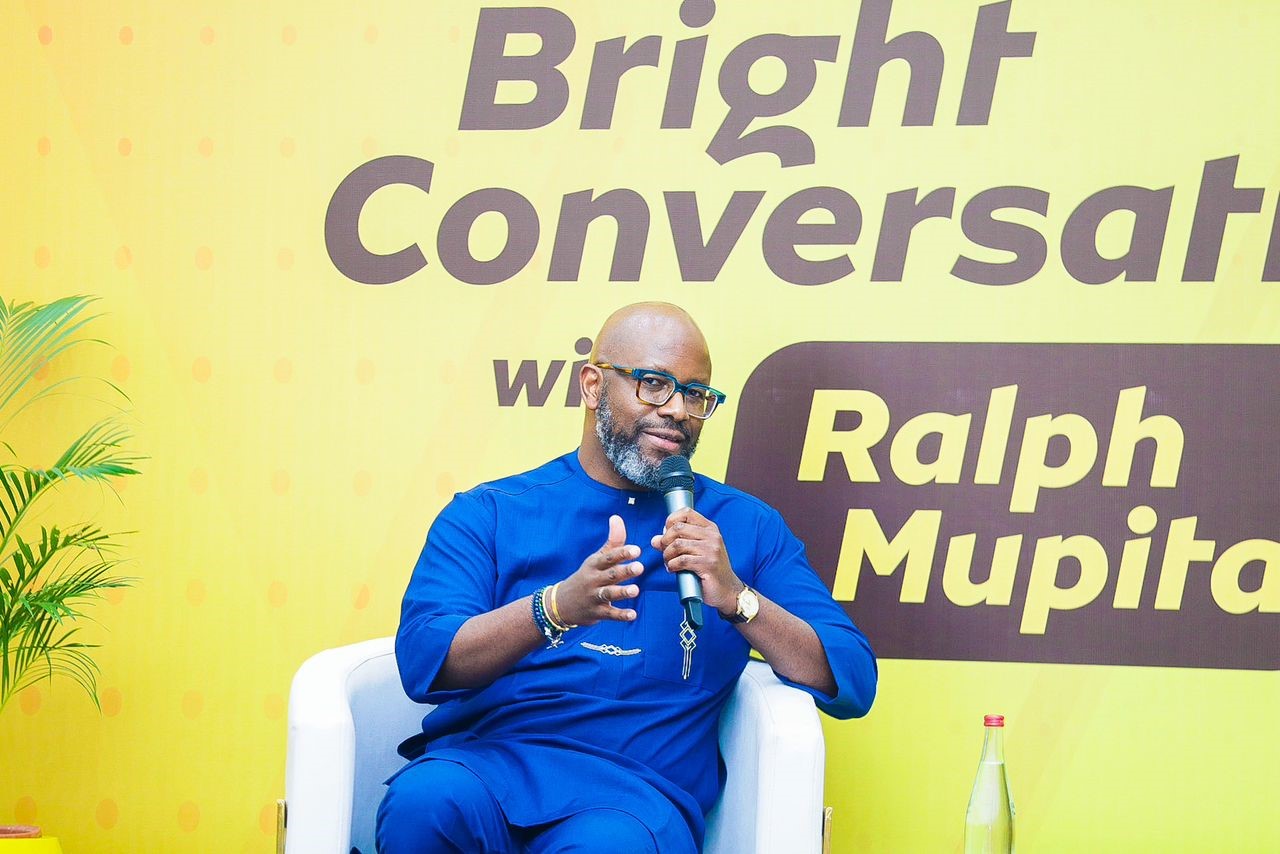
MTN Group Chief Executive Officer, Ralph Mupita, has called on African nations to urgently embrace artificial intelligence (AI) or risk being left behind in the fast-evolving digital era. Speaking at the Kgalema Motlanthe Foundation Inclusive Growth Forum, Mupita stressed that Africa’s slow pace in adopting AI could deepen inequality and create what he described as a “digital underclass” — a situation where only a small segment of the population benefits from technological progress while the majority are left behind.
According to Mupita, the world is moving rapidly into an AI-driven future, and Africa must act decisively to ensure that its citizens, especially the youth, are not excluded from the immense opportunities the technology offers. He argued that the continent cannot afford to be passive, urging governments, private sector leaders, and policymakers to take bold and coordinated steps that will position Africa as a key player in the global AI landscape.
He highlighted six critical areas that demand urgent attention if Africa hopes to fully tap into the power of AI. First among them is the need for reliable and abundant electricity. Without stable power, Mupita explained, economic and technological growth will remain limited. He referenced data from the International Energy Agency, which estimates that Africa will require more than $200 billion in annual investments to meet its energy and climate goals by 2030.
The second area of focus is the continent’s weak digital infrastructure. Mupita pointed out that Africa currently holds less than two percent of the world’s total data centre capacity — a major obstacle to technological advancement. To close this gap, the International Telecommunication Union projects that Africa needs $96 billion in investments by 2030. Mupita stressed that these investments must extend beyond traditional internet networks, such as fibre and subsea cables, to include infrastructure capable of supporting AI research and data storage.
He also underlined the importance of developing African language models to ensure that AI tools reflect the continent’s diverse cultures and languages. With over 2,000 native languages, fewer than two percent are represented in existing global AI systems. Mupita praised initiatives like Nigeria’s Atlas for Languages & AI at Scale — a project designed to build open-source models that understand and generate African languages — as a crucial step toward digital inclusion.
Another key priority, according to Mupita, is equipping Africa’s young population with digital and AI-related skills. With the continent expected to have the world’s largest youth workforce by 2050, he said training and education in these areas are essential. He noted that sub-Saharan Africa could generate around 230 million digital jobs by 2030, but warned that governments and industries must ensure the number of new and improved jobs surpasses those replaced by automation.
Finally, Mupita called for collaboration between governments, private companies, and civil society to design effective policies and governance structures for AI. He insisted that Africa must not merely consume technologies created elsewhere but instead produce homegrown solutions tailored to its realities.
In his words, Africa’s future will depend on its ability to act now — with purpose, unity, and vision — to become a creator of AI innovation rather than a bystander in the digital revolution.





купить диплом технолога [url=www.rudik-diplom12.ru]купить диплом технолога[/url] .
**back biome official**
Mitolyn is a carefully developed, plant-based formula created to help support metabolic efficiency and encourage healthy, lasting weight management.