


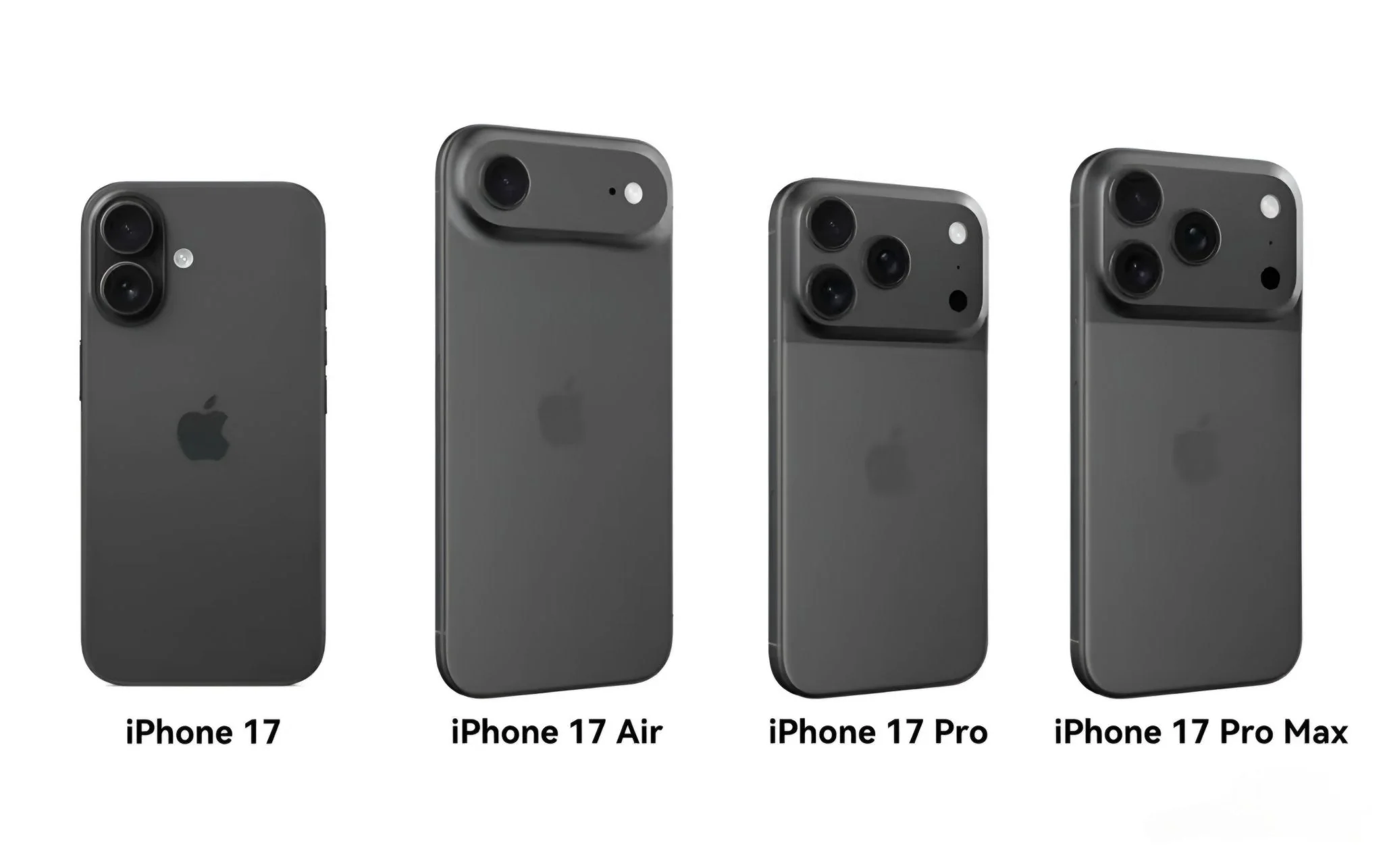
Apple has officially introduced the iPhone 17 series, unveiling the devices on September 9, 2025 during its annual “Awe Dropping” event in Cupertino. The announcement marked the start of another chapter in the company’s smartphone journey. Pre-orders opened worldwide on September 12, and the handsets reached stores and began shipping on September 19, 2025, drawing strong interest from eager buyers.
Apple has made durability a central theme this year. Every model is built with a stronger titanium frame and what the company calls “Ceramic Shield 2,” designed to better resist scratches and everyday wear. The iPhone Air, the slimmest in the lineup, is being marketed as Apple’s thinnest and lightest flagship ever, without sacrificing toughness. A refreshed color palette with subtle metallic finishes also gives the devices a sleek, modern look.
The new iPhones continue Apple’s push for richer displays. The standard iPhone 17 features a 6.3-inch Super Retina XDR OLED screen, while the Pro and Pro Max boast slightly larger panels. Importantly, Apple has extended its ProMotion technology across the entire lineup, meaning every model now supports refresh rates of up to 120Hz. An Always-On display, previously exclusive to higher-end devices, is also standard this year, allowing users to check notifications and widgets at a glance.
At the heart of the iPhone 17 is the A19 Bionic chip, while the Pro models are powered by the enhanced A19 Pro. Apple claims this new processor delivers faster performance, better energy efficiency, and stronger support for artificial intelligence features. Paired with a new N1 wireless chip supporting Wi-Fi 7, Bluetooth 6, and Thread connectivity, the devices are equipped for both speed and smart home integration. The Pro models come with 12GB of RAM, offering smoother multitasking and support for heavier workloads such as video editing and gaming.
Photography remains a major selling point. The base iPhone 17 is fitted with a dual-camera system, combining a 48-megapixel wide lens with an ultra-wide companion. Pro models add a telephoto lens, giving users advanced zoom capabilities and improved low-light performance. The front camera has also been updated with Center Stage, which automatically adjusts framing during video calls, and Dual Capture mode that records simultaneously from the front and back cameras.
Battery life has seen a notable bump, especially in the Pro Max model, which early reviewers are calling Apple’s longest-lasting iPhone to date. The devices also charge faster: with a 40-watt adapter, users can expect to reach 50 percent power in around 20 minutes. Apple has promised that adaptive software tweaks will further stretch daily usage.
The iPhone 17 series launches with iOS 26, which introduces a fresh “Liquid Glass” design language. The software also refines Dynamic Island, adds more customization to the Action Button, and introduces Adaptive Power Mode to conserve energy. Together, these updates aim to make everyday interactions smoother and more efficient.
Apple has shifted its storage strategy by starting all models at 256GB, a move welcomed by users who rely heavily on photos, videos, and apps. Options scale up to 512GB for the standard model and as high as 2TB for the Pro Max. Prices begin at $799 in the United States, with the premium Pro Max reaching well above $1,000 depending on configuration.
With its iPhone 17 series, Apple has widened access to features once limited to its top-tier models, while still pushing the boundaries in performance and design. Whether it is the ultra-thin iPhone Air or the battery-heavy Pro Max, the company has crafted a family of devices aimed at appealing to a broad range of users. As the lineup, released in mid-September 2025, continues its rollout worldwide, the coming months will reveal whether the iPhone 17 can live up to the hype and strengthen Apple’s dominance in the global smartphone market.