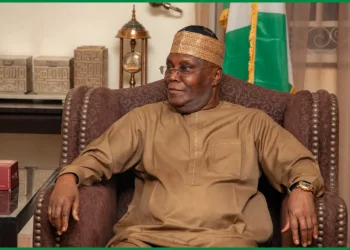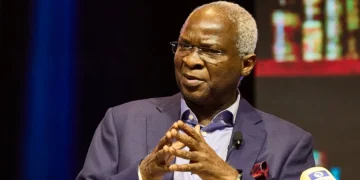


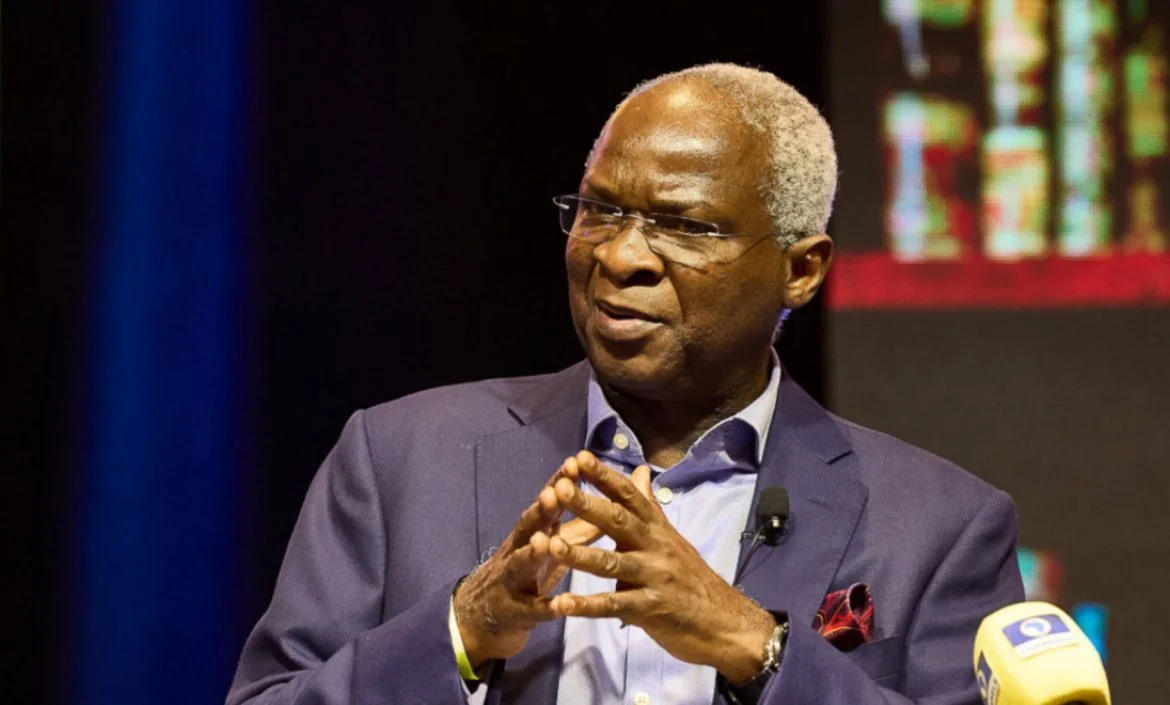
Former Minister of Works and Housing, Babatunde Fashola, has criticised former Vice President Atiku Abubakar’s pledge to reintroduce petrol subsidy if elected president in 2027, describing the proposal as impractical and difficult to sustain.
Fashola expressed doubts about the availability of sufficient crude oil to support the proposed arrangement, pointing to Nigeria’s persistent production challenges, pipeline destruction and security concerns in oil-producing communities.
The former Lagos State governor made his position known on Tuesday while speaking on Channels Television’s Politics Today, where he challenged Atiku to explain the source of the crude oil required to supply domestic refineries and finance the proposed subsidy programme.
According to him, Nigeria has yet to maximise its existing oil production capacity because of longstanding operational and security problems. He questioned how the former vice president intended to overcome these obstacles before making such a commitment.
Fashola maintained that Atiku should provide Nigerians with concrete explanations rather than campaign promises that might prove impossible to fulfil after assuming office.
He argued that voters deserved sufficient information to determine whether the proposal was achievable, warning that the country could once again face the consequences of an inadequately planned economic policy.
When asked directly about the feasibility of the proposal, Fashola maintained that the idea was unrealistic, stressing that his assessment was based on the policy itself rather than Atiku as an individual.
He also raised questions about the former vice president’s consistency, recalling that Atiku advocated the removal of petrol subsidy during the 2023 presidential campaign.
Fashola wondered what had changed to make the former vice president reconsider his earlier position, suggesting that Nigerians deserved an explanation for the apparent shift in policy direction.
He further argued that bringing back subsidy would require more than a presidential announcement, as the relevant provisions of existing legislation would have to be reviewed by the National Assembly.
According to him, lawmakers would need to consider the financial consequences before supporting any move to restore government payments on petroleum products.
The former minister also recalled the financial difficulties experienced by state governments during the previous subsidy arrangement, explaining that reduced federal revenue affected allocations to states.
He warned that reinstating the programme could place additional pressure on government finances, potentially forcing some state administrations to borrow money to meet salary obligations.
Atiku had earlier promised to introduce a temporary and independently monitored subsidy system if elected in 2027. His proposed arrangement would focus on petroleum products processed locally rather than returning to the previous import-dependent structure.
The former vice president argued that the measure would help reduce petrol prices, transportation expenses and food costs while providing relief to Nigerians struggling with rising living expenses.
President Bola Tinubu announced the termination of petrol subsidy during his inauguration on May 29, 2023, citing the enormous financial burden it placed on government resources. The decision, alongside foreign exchange reforms, contributed to increased living costs across the country.
Meanwhile, Fashola also defended Tinubu against questions surrounding his physical and mental capacity to continue leading the country.
He maintained that the president remained mentally capable of carrying out his constitutional responsibilities, explaining that his observations of Tinubu’s involvement in government activities had not raised concerns.
The former Lagos governor acknowledged the president’s advancing age but insisted that it should not automatically be interpreted as an indication of declining mental ability.
Reflecting on their years of working together in Lagos State, Fashola described Tinubu as a more experienced and mature individual than the politician he encountered when he joined his administration in 2002.
He, however, admitted that the president might no longer maintain the demanding late-night work schedule he was previously accustomed to, insisting that Tinubu still possessed the capacity to handle important government responsibilities.