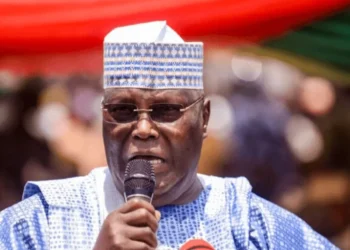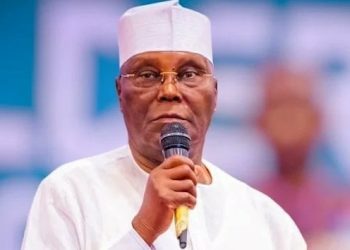


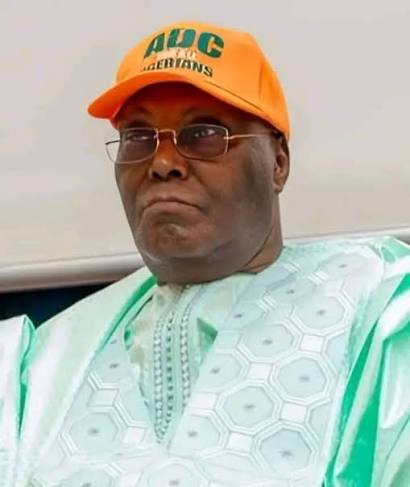
Former Vice President and African Democratic Congress (ADC) presidential candidate, Atiku Abubakar, has backed organised labour’s demand for a substantial increase in Nigeria’s minimum wage, arguing that the current ₦70,000 wage floor has failed to restore workers’ purchasing power amid rising living costs.
Atiku made the position known in a statement issued by the Director of Strategic Communications of the ADC Presidential Campaign Council, Phrank Shaibu, in which he criticised the economic impact of fuel, food, transportation and housing costs under the administration of President Bola Tinubu.
Atiku argued that although the statutory minimum wage was increased from ₦30,000 to ₦70,000 in 2024, the increase had been eroded by rising prices.
Using petrol prices as an illustration, he said the former ₦30,000 minimum wage could purchase approximately 118 litres of petrol when the national average price was ₦254.06 per litre in April 2023. At a petrol price of ₦1,400 per litre, he said, the current ₦70,000 wage can purchase only 50 litres. The arithmetic of the comparison checks out.
“The payslip has grown, but the fuel it can buy has more than halved,” Atiku said.
He linked the erosion of purchasing power to the wider increase in the cost of living, arguing that higher petrol prices affect transportation, food production and distribution, household expenses and other essential goods and services.
Recent reporting has put petrol prices at around ₦1,400 per litre in Lagos and Abuja, with prices reaching about ₦1,500 in parts of northern Nigeria. The increase has renewed concerns over the cost of living and prompted fresh calls from labour leaders for wage support.
Atiku Calls for Immediate Wage Review
Atiku called on the Federal Government to agree to what he described as a substantial increase in the minimum wage to reflect the current cost of food, transportation, rent and electricity.
He also challenged the government to provide workers with a clear position on whether it intends to increase wages, arguing that workers should not be left waiting through prolonged negotiations.
“Nigerian workers deserve an answer, not another round of meetings that ends where it began. I will begin the work of raising the wage floor from my first day in office,” he said.
The ADC candidate further promised that, if elected in 2027, his administration would pursue higher wages alongside measures aimed at reducing the cost of essential goods and energy.
Compares Nigeria’s Wage With Other African Countries
Atiku also compared Nigeria’s minimum wage with wage levels in other African and oil-producing countries.
According to figures contained in his statement, using exchange rates from July 24, 2026, Libya’s monthly minimum wage was equivalent to approximately ₦213,000, Algeria’s ₦245,000, Equatorial Guinea’s ₦302,000 and Gabon’s ₦351,000.
He acknowledged that minimum-wage systems, exchange rates and living costs vary from country to country, but argued that such differences do not change the challenges facing Nigerian workers.
Proposes Targeted Production Subsidy
Beyond increasing wages, Atiku said his economic programme would seek to reduce the cost pressures responsible for eroding workers’ incomes.
He proposed a targeted production subsidy for petroleum products refined in Nigeria and sold to Nigerian consumers, subject to a spending cap, public accounting and independent auditing.
According to him, government intervention should be tied to measurable reductions in the cost of fuel rather than simply increasing public expenditure.
He also reaffirmed his support for realistic wage adjustments, targeted social protection and measures aimed at stabilising the prices of essential goods and energy.
Labour Also Seeks Higher Wage
Atiku’s comments come amid renewed calls by organised labour for a review of the ₦70,000 minimum wage.
The Nigeria Labour Congress has argued that the current wage no longer adequately reflects prevailing economic conditions, with workers facing increases in the cost of food, transportation and other basic necessities.
The Federal Government increased the national minimum wage from ₦30,000 to ₦70,000 in 2024 following negotiations involving government, organised labour and the private sector.
Atiku said the debate should not focus solely on the numerical increase in wages but on what workers can actually afford with their earnings.
“A living wage must buy a living. It is not a privilege; it is a basic right,” he said.
The former vice president said his proposed approach would combine wage adjustments with policies intended to lower living costs, arguing that higher salaries alone would have limited effect if inflation and the prices of essential goods continue to erode household incomes.