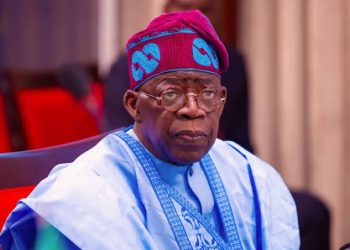


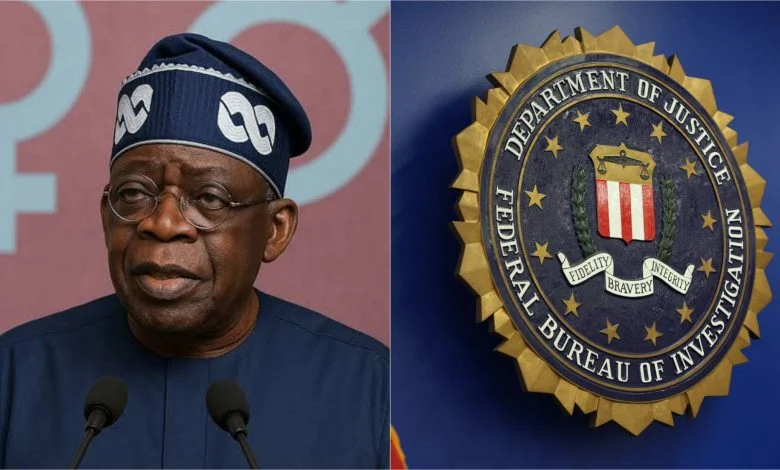
Nigeria’s ambassador-designate to Mexico, Reno Omokri, has provided clarification on the long-running controversy surrounding United States investigative records connected to President Bola Ahmed Tinubu.
Speaking during an appearance on Channels Television’s Politics Today, Omokri acknowledged that an FBI investigation involving individuals associated with Tinubu took place in the United States. However, he stressed that Tinubu was not personally the focus of the investigation.
His comments followed renewed public discussion over documents relating to investigations conducted in the US during the 1990s.
Omokri said recent debates surrounding the records had created the impression that the Nigerian President was directly investigated for a criminal offence by American authorities.
He rejected that interpretation, explaining that Tinubu was working as an accountant at the time and handled financial resources belonging to clients who were reportedly being investigated by US authorities.
According to Omokri, the funds that attracted attention were connected to Tinubu’s clients and should not automatically be interpreted as evidence of a criminal investigation against the President.
He explained that after the funds became a subject of concern, Tinubu agreed to their forfeiture.
Omokri stressed that the forfeiture involved the accounts holding the funds and was not a punishment imposed on Tinubu personally.
The controversy has resurfaced following developments involving requests for historical records held by American law-enforcement agencies.
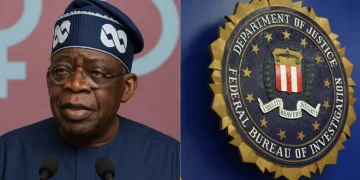
The matter is linked to Freedom of Information Act proceedings involving the Federal Bureau of Investigation and the Drug Enforcement Administration.
The case attracted renewed attention after the FBI and DEA released hundreds of pages of documents connected to the records being sought.
Reports indicate that some sections of the documents remain withheld or obscured, with the agencies citing exemptions contained in American law.
The legal dispute is being handled by Judge Beryl A. Howell of the United States District Court for the District of Columbia.
The Nigerian Presidency has maintained that the proceedings should not be interpreted as a criminal prosecution of Tinubu.
According to the Presidency, the dispute centres on access to government records and whether the withholding or redaction of certain information complies with the provisions of US law.
Omokri also drew attention to a document dated February 4, 2003, which he said originated from the US Embassy in Nigeria.
He claimed that the document reflected the outcome of a criminal-record search conducted through the FBI’s National Crime Information Center.
The correspondence was reportedly addressed to Tafa Balogun, who served as Nigeria’s Inspector-General of Police at the time.
Omokri said the search did not produce any criminal arrest record, outstanding warrant or wanted-person notice against Tinubu.
He also pointed out that the document identified Tinubu’s date of birth as March 29, 1952.
The ambassador-designate argued that the 2003 document should not be confused with the more recent FOIA proceedings involving the FBI and DEA.
He explained that the presence of a person’s information within FBI records does not necessarily indicate that the individual has a criminal history.
According to him, federal law-enforcement databases may contain information collected for several purposes, including background checks and other official investigative activities.
Omokri repeated his position that an investigation involving people connected to Tinubu should not be interpreted as proof that Tinubu himself was the subject of a criminal probe.
However, the authenticity and significance of the 2003 document have also generated public debate.
Although Omokri has relied on it to support his claim that Tinubu had no criminal arrest record or outstanding warrant at the time, questions have been raised regarding the document’s authenticity and the precise scope of the search conducted.
US lobbying firm Von Batten-Montague-York also questioned the authenticity of the document after it was circulated publicly by Omokri.
The development has added another layer to the continuing debate over Tinubu’s historical records in the United States.