

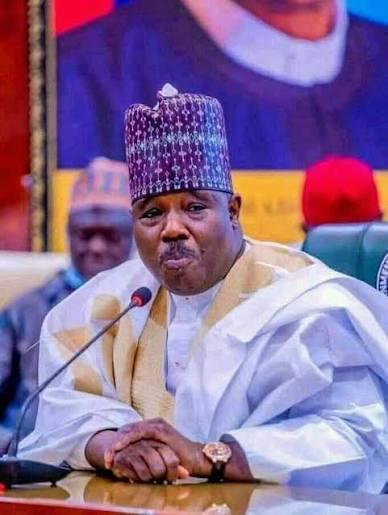
Former Borno State Governor and All Progressives Congress (APC) chieftain, Ali Modu Sheriff, has urged former Vice President Atiku Abubakar not to contest the 2027 presidential election, arguing that it remains the South’s turn to produce Nigeria’s president under an unwritten power-sharing arrangement.
Sheriff made the remarks during an appearance on Channels Television’s Politics Today, where he expressed confidence that President Bola Tinubu would secure a second term in office. He maintained that the North should respect the principle of rotational leadership and wait until 2031 before presenting another presidential candidate.
According to Sheriff, Atiku is qualified to lead the country but should defer his ambition in the interest of national balance and political stability.
He argued that the informal zoning arrangement adopted by political leaders after the civil war was designed to foster unity by ensuring that power rotates between the North and the South. Sheriff said the North would be reluctant to support another northern presidential candidate in 2027 because former President Muhammadu Buhari had already completed two terms in office.
The former governor also predicted that President Tinubu would enjoy strong political support ahead of the next general election, while cautioning members of the APC against complacency despite their confidence in retaining power.
Sheriff further dismissed the prospects of other opposition figures, including Peter Obi, claiming they would struggle to secure widespread support in Northern Nigeria. He argued that regional political realities would significantly influence the outcome of the 2027 presidential election.
His comments come amid increasing political consultations and coalition-building ahead of the 2027 general elections, with major political parties and opposition groups positioning themselves for what is expected to be a closely watched contest.
Sheriff’s position has added to the ongoing national debate over power rotation, zoning, and the future of Nigeria’s political leadership. While supporters of rotational presidency argue that it promotes inclusion and national cohesion, critics maintain that leadership should be determined primarily by competence, electoral support, and constitutional provisions rather than informal political agreements.
As preparations for the 2027 elections continue, discussions over zoning and the choice of presidential candidates are expected to remain central issues in Nigeria’s political landscape.