

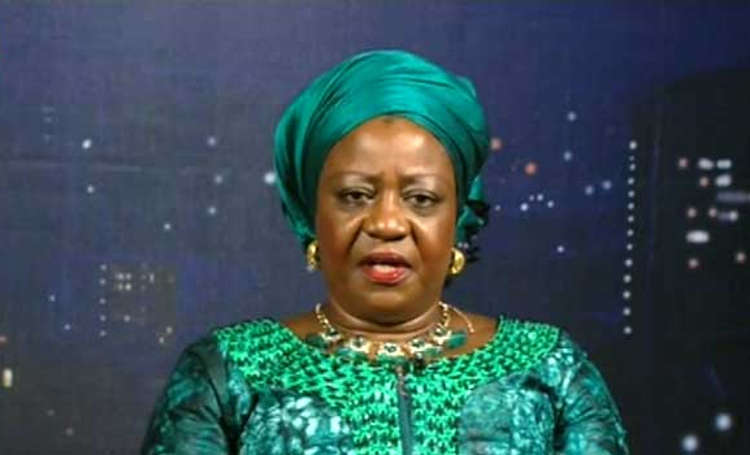
Lauretta Onochie has criticised the continued detention of Nasir El-Rufai, insisting that the former Kaduna State governor should be freed immediately to protect democratic values and political freedom in Nigeria.
Onochie, who previously served as an aide to former President Muhammadu Buhari, made her position known through a post on X, where she warned against using government institutions to intimidate or silence opposition figures.
According to her, democracy can only survive when people with opposing political views are allowed to express themselves freely without fear of harassment, arrest, or persecution. She argued that political disagreements should be resolved through public debate, dialogue, and elections rather than through detention or intimidation.
The former presidential aide stated that many Nigerians now believe the accusations against El-Rufai are politically driven and intended to weaken opposition forces in the country. She described reports surrounding his prolonged detention as troubling and capable of damaging public trust in the justice system.
Onochie also alleged that there were suggestions that El-Rufai’s release could depend on certain political compromises, including rejoining the All Progressives Congress or withdrawing from political activities. She condemned such alleged demands, describing them as attempts to force political loyalty through pressure and fear.
She maintained that no individual should be compelled to trade political beliefs or constitutional rights in exchange for personal freedom. In her view, such practices are inconsistent with the principles of fairness, justice, and democratic governance.
The former aide stressed that the right to belong to any political group, criticise government policies, and participate in opposition politics is protected under democratic systems worldwide. She argued that punishing individuals for their political positions weakens democratic institutions and threatens civil liberties.
Onochie said that if authorities genuinely possess evidence against El-Rufai, the proper step would be to conduct a transparent, fair, and timely trial before a competent court. However, she noted that keeping him in detention for an extended period without clear legal resolution only increases public suspicion that political interests are influencing the process.
She warned that the matter should not be viewed solely as El-Rufai’s personal challenge, but as a broader test of Nigeria’s commitment to democracy and rule of law. According to her, the development raises concerns about whether citizens can still freely oppose those in power without facing intimidation.
Calling for immediate action, Onochie urged the government to release El-Rufai or at least grant him bail while legal proceedings continue. She said prolonged detention without swift judicial handling undermines confidence in the country’s legal institutions.
She further cautioned that silencing opposition voices could weaken democratic competition and create an atmosphere where only one political viewpoint is tolerated. Onochie emphasised that strong democracies depend on the existence of active opposition parties and freedom of expression.
Concluding her remarks, she stated that any nation that suppresses dissent risks drifting away from democratic governance toward authoritarianism, where criticism and political competition are no longer tolerated.