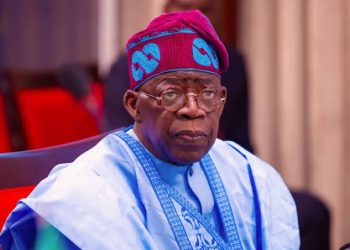


President Bola Tinubu says his administration has achieved 12 remarkable economic milestones in just over two years, attributing the progress to sound fiscal and monetary reforms.
Speaking in a nationwide broadcast to mark Nigeria’s 65th Independence anniversary, the president said the economic reforms rolled out since 2023 are beginning to deliver tangible results.
“Under our leadership, our economy is recovering fast, and the reforms we started over two years ago are producing measurable outcomes,” Tinubu said.
He highlighted key achievements, including strong GDP growth, reduced inflation, higher non-oil revenues, and improved fiscal stability. According to him, Nigeria’s economy grew by 4.23% in the second quarter of 2025—its fastest pace in four years—outperforming the IMF’s 3.4% projection. Inflation also dropped to 20.12% in August, the lowest in three years.
Tinubu said agricultural production and food security indicators are improving, helping to reduce food costs. On government revenue, he disclosed that Nigeria surpassed its 2025 non-oil revenue target of ₦20 trillion by August. “In September alone, we raised ₦3.65 trillion—411 per cent higher than in May 2023,” he added.
The president also pointed to a sharp decline in the debt service-to-revenue ratio, which dropped from 97% to below 50%, easing fiscal pressures. He said the removal of fuel subsidies freed trillions of naira for investment in infrastructure and social programmes.
Nigeria’s external reserves, Tinubu revealed, surged to $42.03 billion in September 2025—the highest since 2019. He added that tax reforms had raised Nigeria’s tax-to-GDP ratio to 13.5% from under 10%, with new legislation set to expand the tax base without overburdening low-income earners.
Other milestones highlighted include five consecutive quarters of trade surplus, an increase in daily oil production from one million barrels in 2023 to 1.68 million barrels, and the revival of domestic petroleum refining after four decades. Tinubu also noted that Nigeria has become Africa’s leading exporter of aviation fuel.
On infrastructure, the president announced progress on major transport projects, including the 284-kilometre Kano-Katsina-Maradi Standard Gauge rail, Kaduna-Kano rail, Lagos-Calabar Coastal Highway, and Sokoto-Badagry Highway. He said the Federal Executive Council had approved $3 billion for the completion of the Eastern Rail Project.
He further revealed that the Nigerian stock market has more than doubled, climbing from 55,000 points in May 2023 to 142,000 points in September 2025, while credit rating agencies have upgraded the country’s outlook. The Central Bank of Nigeria, he added, recently cut interest rates for the first time in five years, signaling investor confidence.
On social welfare, Tinubu said ₦330 billion had been disbursed to eight million households under the Social Investment Programme. He also highlighted growth in the solid minerals sector and ongoing efforts to expand security operations to safeguard economic progress.
“As we celebrate 65 years of independence, our reforms are laying the foundation for a stronger and more prosperous Nigeria,” the president concluded.