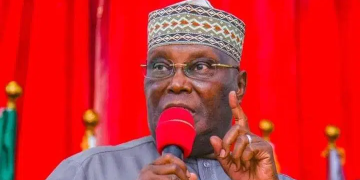


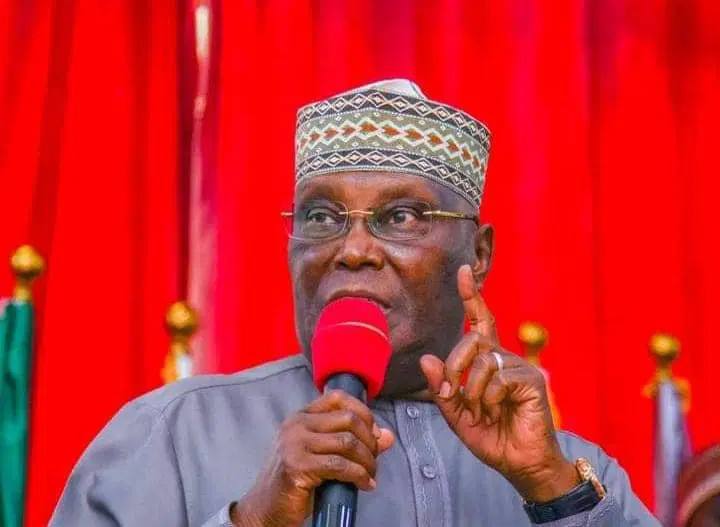
Former Vice President and (ADC) African Democratic Congress presidential hopeful, Atiku Abubakar, has strongly criticized former Secretary to the Government of the Federation, Babachir Lawal, accusing him of allowing resentment and personal grievances to shape his public remarks.
In a statement issued on Sunday through his media aide, Phrank Shaibu, Atiku expressed disappointment over what he described as inflammatory comments made by Lawal. He argued that the former SGF had abandoned objective reasoning and instead relied on ethnic stereotypes, unfounded allegations, and divisive rhetoric in his criticism of him.
According to Atiku, Lawal’s recent interventions reveal a man increasingly consumed by frustration and hostility. He maintained that political disagreements should not lead to bitterness or persistent anger, adding that public figures have a responsibility to contribute positively to national discourse rather than deepen divisions.
The former vice president urged Lawal to embrace tolerance and self-reflection, stressing that Nigeria requires leaders who promote unity and constructive engagement instead of spreading resentment. He lamented that someone of Lawal’s experience and status would choose to attack opponents through sweeping generalizations rather than facts.
Atiku further noted that despite the seriousness of the accusations levelled against him, Lawal failed to provide credible evidence to substantiate his claims. He argued that political debates should be grounded in verifiable information rather than suspicion, speculation, or emotional appeals.
A major concern raised by Atiku was what he described as attempts to associate an entire ethnic group with the actions of a few individuals. He warned that such narratives are dangerous and unfair because they encourage collective blame and reinforce ethnic tensions. According to him, no Nigerian should be judged solely on the basis of ancestry or communal identity.
He emphasized that applying such logic would mean every ethnic community in the country could be held responsible for the crimes of a minority within its ranks. Atiku said this kind of thinking has historically contributed to mistrust and weakened national cohesion.
The ADC candidate also highlighted what he viewed as contradictions in Lawal’s position. He recalled that Lawal once served at the highest level of government under former President Muhammadu Buhari, whom he noted is of Fulani extraction. Atiku questioned why Lawal accepted the confidence and opportunities extended to him at the time but now appears willing to cast aspersions on an entire ethnic group because another Fulani politician seeks elective office.
He also challenged Lawal’s recent public statements, noting that while portraying himself as a victim of political circumstances, he simultaneously boasts about his influence and claims of being courted by prominent political actors. Atiku said Nigerians would naturally wonder which version of Lawal accurately reflects reality.
While acknowledging Lawal’s right to pursue any political platform of his choice, Atiku insisted that personal ambitions should not be disguised as patriotic concerns.
Addressing claims that he has been silent on insecurity and violence, Atiku rejected the allegation, pointing to his long record of condemning terrorism, banditry, kidnappings, communal conflicts, and attacks affecting both Christians and Muslims across the country.
He cited his visit to victims of violence in Kagoro, Southern Kaduna, where he stood in solidarity with affected families regardless of ethnicity or religion. He also referenced his support for some of the rescued Chibok schoolgirls through scholarship opportunities at the American University of Nigeria, describing it as part of his commitment to helping vulnerable Nigerians without discrimination.