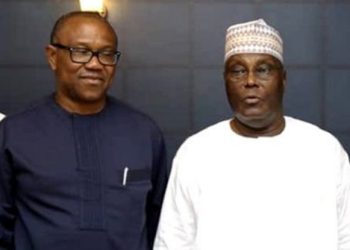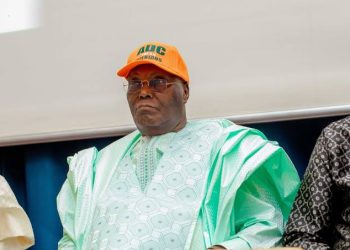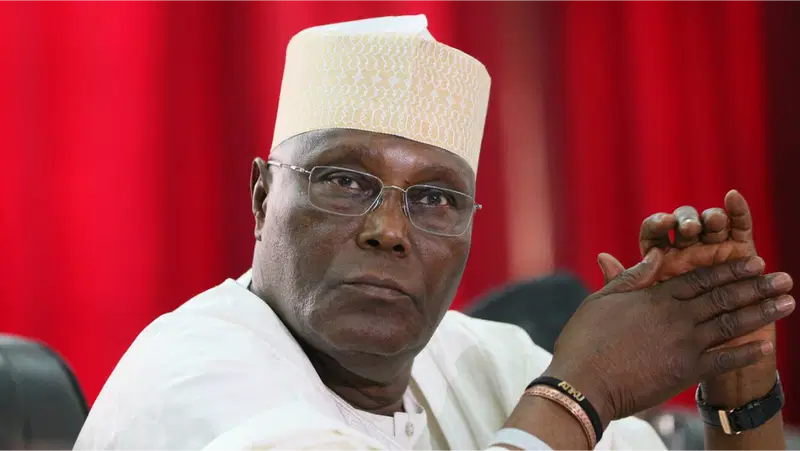
Former Vice President Atiku Abubakar has urged the Federal Government to safeguard opposition leaders, insisting that democracy can only thrive when citizens are free to express differing political views without fear of intimidation or persecution.
In a statement issued through his Senior Special Assistant on Public Communication, Phrank Shaibu, the African Democratic Congress (ADC) presidential candidate argued that a nation’s democratic health should be judged by how well it protects the rights of those outside government, not by how much power those in office exercise.
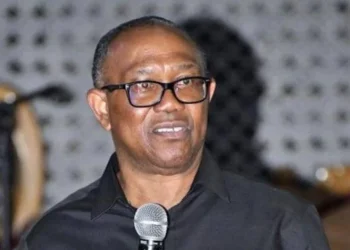
Atiku specifically called for the protection of Labour Party figure Peter Obi, stressing that no harm should come to him. He also renewed his demand for the release of former Kaduna State Governor Nasir El-Rufai, while urging authorities to intensify efforts to rescue Nigerians still being held by kidnappers.
Drawing from a traditional proverb, the former vice president cautioned Nigerians against ignoring injustice directed at others, warning that today’s victim could easily become tomorrow’s. He maintained that defending democratic freedoms is a shared responsibility that transcends political affiliations.
According to him, the Federal Government should shift its attention from political disagreements to addressing the country’s pressing security and humanitarian challenges. He said insecurity, mass abductions and the suffering of ordinary Nigerians deserve greater urgency than political confrontations.
Atiku further argued that history would ultimately judge any administration not by the intensity of its battles with critics, but by its commitment to protecting lives, delivering justice, rescuing vulnerable citizens and preserving democratic institutions.
He expressed concern over the Presidency’s reaction to recent remarks made by Peter Obi, saying government officials responded with personal attacks instead of the calm and restraint expected from those occupying public office.
According to Atiku, leaders in a democracy should respond to criticism through facts, dialogue and responsible leadership rather than insults capable of deepening political divisions. He warned that reducing national discourse to personal attacks weakens confidence in democratic governance and diminishes the dignity of the presidency.
The former vice president also rejected the notion that political opposition should be treated as an enemy of the state. Instead, he identified poverty, hunger, insecurity, corruption, kidnapping and widespread violence as the real threats confronting Nigeria.
He maintained that government resources should be directed toward tackling these national challenges rather than engaging in prolonged political disputes with opposition figures.
Atiku lamented the continued ordeal of families whose loved ones remain in captivity, noting that many schoolchildren, teachers and other innocent Nigerians are still awaiting rescue. He urged the authorities to devote the same energy used in political communication to securing the release of those held by criminal groups and restoring confidence in the country’s security architecture.
Reiterating his position on El-Rufai’s detention, Atiku argued that justice must always be administered fairly, impartially and in accordance with constitutional provisions. He stressed that every Nigerian, regardless of political leaning or status, deserves due process, equal protection before the law and the presumption of innocence until proven guilty by a competent court.
He concluded by urging the Federal Government to address public concerns surrounding its administration with transparency, accountability and openness rather than political rhetoric. According to him, public trust can only be rebuilt when leaders provide honest answers, strengthen democratic institutions and demonstrate that everyone remains subject to the rule of law.